AC-DC Rectifiers Key Applications in Industrial Power Systems

When it comes to powering industrial machinery, reliable, consistent power conversion is crucial. One key component that makes this possible is the AC-DC rectifier, a device that converts alternating current (AC) into direct current (DC). This may sound simple, but in industrial power systems, the role of rectifiers is critical for performance, safety, and energy efficiency.
At Bruce Electric Equipment Corp., we’ve provided industrial rectifiers and power solutions since 1973, helping facilities across the U.S. stay powered and productive. In this blog, we break down what AC-DC rectifiers are, why they matter in industrial power systems, and how to choose the right one for your needs.
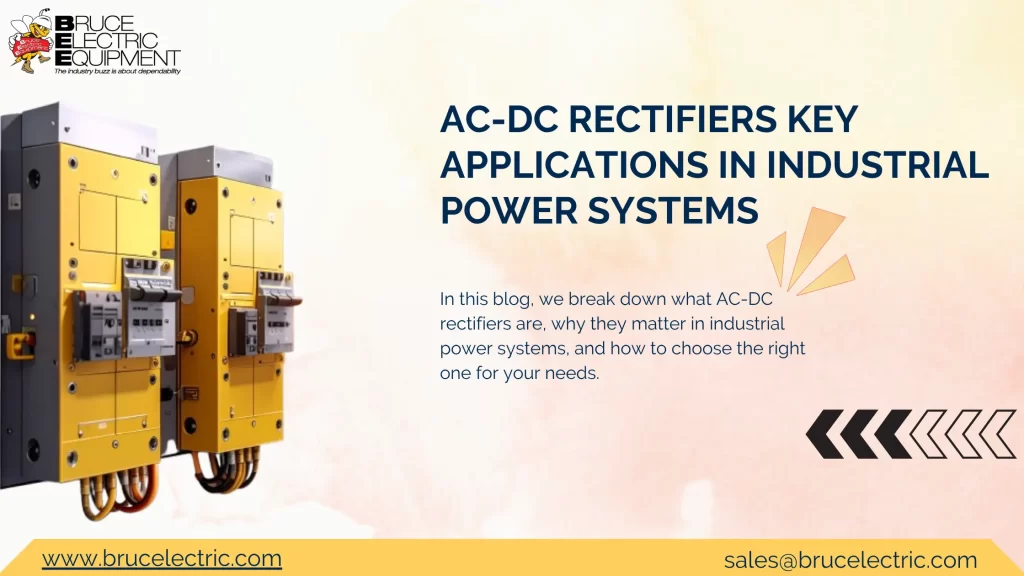
What Is an AC-DC Rectifier?
An AC-DC rectifier is an electronic device that converts alternating current (AC) which flows in both directions into direct current (DC), which flows in only one direction. This conversion is essential for any equipment that requires DC power to operate.
How It Works: AC-DC rectifiers use diodes, thyristors, or bridge circuits to allow current to flow in only one direction. Some rectifiers also include voltage regulators or filters to ensure a smooth and stable DC output.
Where Are AC-DC Rectifiers Used in Industrial Power Systems?
1) Motor Drives: DC motors are often used in applications requiring precise speed control, such as conveyor belts or elevators. AC-DC rectifiers supply these motors with the required DC power.
2) Electroplating and Metal Finishing: These processes rely on steady DC current for even and reliable plating results. A rectifier ensures that the power supply remains stable, even under load.
3) Battery Charging Systems: From forklifts to backup generators, industrial Rectifiers are everywhere in industrial settings, powering a wide range of machinery, processes, and control systems. Here are some of the most common applications: batteries need controlled DC charging, which is supplied by rectifiers.
4) Magnetizing Equipment: Scrap yards and recycling facilities use electromagnets powered by DC. AC-DC rectifiers ensure the magnets have the strong, continuous current needed for lifting heavy metals.
5) Elevator & Hoist Systems: Many vertical transport systems use DC power for better torque and speed control. Rectifiers are responsible for supplying this clean power.
6) Telecommunications & Control Panels: These systems require constant, clean DC voltage to avoid data loss, power interruptions, or equipment malfunction.
Why Industrial Facilities Rely on AC-DC Rectifiers
– Ensures continuous operation of sensitive equipment.
– Supports fine-tuned motor and system control.
– Reduces energy loss during conversion.
– Available in various voltage and current ratings for large and small systems.
– Many rectifiers come with built-in surge protection, overload cutoff, and thermal safety.
Key Difference: AC-DC Rectifier vs. Inverter
While both rectifiers and inverters are used for power conversion, their direction of conversion is what sets them apart:
AC-DC Rectifier: Converts Alternating Current (AC) into Direct Current (DC).
➤ Used for DC-powered equipment, such as industrial motors, magnets, and battery charging systems.
DC-AC Inverter: Converts Direct Current (DC) into Alternating Current (AC).
➤ Commonly used in solar power systems or battery backups to feed AC-powered loads.
Why Buy Rectifiers from Bruce Electric?
At Bruce Electric Equipment Corp., we carry new and reconditioned AC-DC rectifiers from trusted manufacturers like Kinetics Industries, designed to meet the demanding requirements of industrial applications.
With 50+ years of experience and a vast 15,000 sq. ft. warehouse in Lindenhurst, NY, we offer:
- – Expert product guidance
- – Rapid shipping
- – Warranty-backed equipment
- – Competitive pricing
- – Buying used & surplus industrial equipment
Whether you’re looking for a scrap magnet rectifier, elevator rectifier, or custom DC power supply, we can help you find the right unit.
Whether you’re upgrading your facility or replacing a faulty power supply, choosing the right AC-DC rectifier is essential to keeping your operations efficient and safe. At Bruce Electric Equipment Corp., we bring you not just the equipment but the expertise to power your business forward.
Need help choosing a rectifier? Contact our team today or browse our inventory online.
Frequently Asked Questions (FAQs) for AC-DC Rectifiers
Q1) What’s the difference between a rectifier and an inverter?
A) A rectifier converts AC to DC, while an inverter converts DC to AC. Both are used in power conversion, but for opposite directions.
Q2) Are AC-DC rectifiers safe to use with sensitive equipment?
A) Modern rectifiers often include voltage regulators and surge protection to ensure stable power for sensitive loads like control systems or telecom equipment.
Q3) Can I use a used or reconditioned rectifier?
A) Absolutely if it’s properly tested and comes from a reliable source. At Bruce Electric, all reconditioned units are fully tested and covered by a warranty.
Q4) How do I know what size rectifier I need?
A) It depends on the voltage and current requirements of your equipment. Our team can help you calculate load requirements and recommend the right unit.
Q5) Do rectifiers need maintenance?
A) Regular inspection and cleaning can extend the lifespan. Some units may require periodic fuse or filter replacement depending on usage.