Shop by Categories
Inquiry Form
If you are interested to know more about the product you can send your enquiry through the below form.
CLUTTER INTO PROFIT

Turn your used or unwanted transformers or circuit breakers into cash or credit
Equipment Purchase Program

50 kVA Transformers
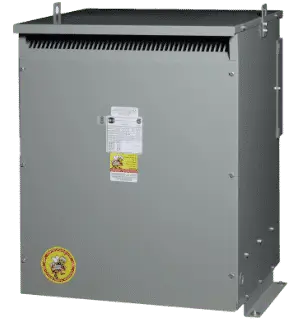
A 50 kVA transformer is a low-voltage distribution transformer designed for reliable power distribution in commercial buildings, industrial facilities, OEM equipment, HVAC systems, automation panels, and electrical system upgrades. Its capacity makes it suitable for applications that require reliable voltage conversion and moderate power distribution without the footprint of larger transformers.
At Bruce Electric Equipment Corp, we supply 50 kVA transformers in a variety of configurations, including 50 kVA single phase transformers and 50 kVA 3 phase transformers. Available options include step-up and step-down designs with multiple voltage combinations to support new installations, equipment replacements, and electrical system modifications.
We offer 50 kVA transformers for sale from leading manufacturers in new, surplus, used, and professionally reconditioned condition. Our team can assist with specification review, voltage selection, and product sourcing to help ensure the transformer meets your electrical system requirements, installation objectives, and applicable application standards.
In Stock Since 1973
50 kVA Dry-Type Transformers – Reliable Commercial & Industrial Power.
Explore 50 kVA dry-type transformers for commercial, industrial, and electrical distribution applications. Bruce Electric offers new, used, surplus, and reconditioned transformer options.
✔ New, used & reconditioned options ✔ Standard & non-standard configurations ✔ Fast RFQ & technical support
Technical Specifications of a 50 kVA Transformer
The specifications below represent common configurations available across new, used, and reconditioned 50 kVA dry type transformers. Actual specifications vary by manufacturer, enclosure type, impedance design, cooling method, and winding material. Always verify transformer nameplate data before installation.
| Specification | Typical Value |
|---|---|
| Power Rating | 50 kVA |
| Transformer Type | Dry-Type Transformers |
| Phase | Single-Phase or Three-Phase |
| Frequency | 60 Hz (standard U.S.) / 50 Hz (international) |
| Cooling Method | Air-Cooled Dry Type (AN – Air Natural) |
| Primary Voltage | 208V, 240V, 480V, 600V, and other available primary voltage configurations |
| Secondary Voltage | 120V, 208Y/120V, 240V, 480Y/277V, and other available secondary voltage configurations |
| Enclosure Types | Applicable NEMA, UL, and other applicable industry standards, depending on the manufacturer |
| Winding Material | Copper or Aluminum |
| Insulation Class | Commonly 220°C Insulation System |
| Temperature Rise | 55°C (industrial control designs); 80°C, 115°C, or 150°C above 40°C ambient (general-purpose/distribution designs) |
| Mounting Style | Floor Mounted or Wall Mounted (Depending on Design) |
| Standards Compliance | Applicable NEMA and UL Standards |
| Condition | New, Used, Reconditioned, and Surplus |
| Service Coverage | Ships to all 50 U.S. states – fast nationwide delivery |
Actual specifications vary by manufacturer, transformer type, and model. Before selecting a transformer, review the nameplate data, certified drawings, impedance rating, enclosure type, and voltage configuration to verify compatibility with the intended electrical system.
How Many Amps Can a 50 kVA Transformer Handle?
50 kVA transformer amperage varies based on the applied voltage and whether the transformer is configured as a single-phase or three-phase unit. Use the formulas below to calculate full-load current for any configuration.
Single-Phase 50 kVA Transformer Amps
For a single-phase transformer:
Full-load current (Amps) = 50,000 ÷ Voltage
Three-Phase 50 kVA Transformer Amps
For a three-phase transformer:
Full-load current (Amps) = 50,000 ÷ (Voltage × 1.732)
50 kVA Transformer Amperage Chart
| Secondary Voltage | Single Phase | Three Phase |
|---|---|---|
| 120V | 416.7 A | – |
| 208V | 240.4 A | 138.8 A |
| 240V | 208.3 A | 120.3 A |
| 277V | 180.5 A | 104.2 A |
| 480V | 104.2 A | 60.1 A |
| 600V | 83.3 A | 48.1 A |
Note: These are theoretical full-load current calculations based on the 50 kVA nameplate rating. Actual operating current depends on the transformer’s rated voltage, phase, connected load, and operating conditions.
The 50 kVA rating should not be interpreted as a fixed amperage value. A 50 kVA transformer can have substantially different current ratings depending on its secondary voltage and phase configuration.
50 kVA Transformer Load Capacity
The 50 kVA transformer load capacity is 50,000 VA (volt-amperes) of apparent power. Industry standard practice, consistent with IEEE C57 and DOE guidance, recommends operating the transformer at no more than 80% of nameplate capacity continuously (40 kVA). This 20% thermal margin prevents insulation degradation, accommodates inrush currents, and provides headroom for load growth.
1. Nameplate rating: 50 kVA (50,000 VA)
2. Recommended continuous load: 40 kVA (80% of rated capacity)
3. At 0.8 power factor: 32 kW real power delivered continuously
4. At 1.0 power factor (unity): 50 kW real power delivered
5. Short-duration overload: Most units can sustain 110–125% of rating for limited periods per IEEE C57.96 thermal overload guidelines; verify with the manufacturer’s specific overload curve.
50 kVA Step Up vs. Step Down Transformer – What’s the Difference?
The terms step-up and step-down describe the direction of voltage transformation, not fundamentally different physical units. In most cases, the same 50 kVA dry-type transformer can perform either function; the designation is determined by which winding is connected to the source (primary) and which is connected to the load (secondary).
50 kVA Step-Down Transformers Common Configurations
| Primary (Source) | Secondary (Load) | Typical Application |
|---|---|---|
| 480V | 208Y/120V | Small commercial buildings, retail fit-outs |
| 240V | 120/240V | Restaurants, offices, small retail |
| 480V | 240/120V | Light industrial panels |
| 600V | 480V | Canadian service entry, industrial retrofit |
50 kVA Step-Up Transformers Common Configurations
| Primary (Source) | Secondary (Load) | Typical Application |
|---|---|---|
| 208V | 480V | Powering 480V-rated equipment from 208V service |
| 240V | 480V | Small motors, compressors, VFD feeds |
| 120/240V | 240/480V | Retrofit projects, imported machinery |
Bruce Electric offers 50 kVA transformers in various voltage configurations, including units suitable for step-up applications. For imported equipment, 50 kVA transformers can also be configured for voltage conversion such as 480V to 400V, 380V or 415V, depending on the equipment requirements.
For reverse-feed or step-up applications, provide the transformer and equipment nameplate details so the required voltage, phase and configuration can be verified before ordering.
50 kVA Transformer Voltage Configurations Available
A 50 kVA transformer is available in a variety of voltage configurations to support different electrical distribution systems, equipment requirements, and installation conditions. The appropriate configuration depends on the available source voltage, required load voltage, phase arrangement, and application requirements.
Single-Phase 50 kVA Transformer Configurations
A 50 kVA single phase transformer is commonly used for dedicated equipment loads, commercial electrical systems, HVAC equipment, OEM machinery, and other applications that operate on single-phase power.
Common configurations include:
1. 240V to 120/240V
2. 480V to 240V
3. 480V to 120/240V
4. 240V to 480V
5. Custom primary and secondary voltage combinations
Three-Phase 50 kVA Transformer Configurations
A 50 kVA 3 phase transformer is commonly used in commercial and industrial facilities that utilize three-phase power distribution. These transformers are frequently applied to distribution panels, motor loads, mechanical systems, process equipment, and facility electrical infrastructure.
Common configurations include:
1. 480V to 208Y/120V
2. 600V to 208Y/120V
3. 480V to 480Y/277V: Isolation applications
4. 208V to 480V
5. 600V to 480Y/277V
6. Custom voltage combinations: Based on application requirements
50 kVA Transformer Weight and Dimensions
The physical size and weight of a 50 kVA transformer vary according to voltage ratings, winding material, enclosure construction, and manufacturer design. Since transformer dimensions are not standardized across all manufacturers, it is important to review model-specific documentation when evaluating space requirements, transportation needs, or replacement compatibility.
50 kVA Transformer Weight Considerations
Several design characteristics influence the overall weight of a transformer, including:
• Copper or aluminum windings
• Core construction and material
• Voltage class and insulation system
• Enclosure design
• Manufacturer-specific engineering requirements
Typical weight ranges for dry-type units include:
• Aluminium-wound 50 kVA dry type transformers: Approximately 350–650 lbs.
• Copper-wound 50 kVA dry type transformers: Approximately 450–900 lbs.
Actual transformer weight varies by configuration, enclosure type, and manufacturer.
50 kVA Transformer Dimensions
The dimensions of a 50 kVA transformer depend on several factors, including:
1. Primary and secondary voltage ratings
2. Cooling and ventilation design
3. Connection and terminal layout
4. Enclosure type
5. Core and coil construction
Many low-voltage dry-type transformers fall within approximate ranges of:
• Width: 24–36 inches
• Depth: 18–30 inches
• Height: 30–48 inches
Note: These values are intended as general references only. Exact 50 kVA transformer dimensions should always be confirmed using manufacturer drawings, certified submittals, and product documentation for the specific transformer being considered.
Applications of 50 kVA Dry Type Transformers
A 50 kVA dry type transformer is used across a wide range of electrical systems where moderate-capacity power distribution or voltage transformation is required. The following examples represent some of the most common applications for this transformer size.
Commercial Buildings
• Lighting and power distribution panels
• Tenant improvement and renovation projects
• Retail and office electrical systems
• Mechanical and HVAC equipment
Industrial Facilities
• Manufacturing machinery
• Production and processing equipment
• Motor control centers and motor loads
• Industrial distribution systems
OEM and Equipment Installations
• Packaging equipment
• Conveyor systems
• Material handling equipment
• Machine tools and process machinery
Control and Automation Systems
• Industrial control panels
• Automation equipment
• Instrumentation systems
• Equipment requiring dedicated power distribution
Institutional and Infrastructure Projects
• Educational facilities
• Healthcare support infrastructure
• Water and wastewater treatment equipment
• Municipal facilities
How to Choose the Right 50 kVA Transformer
Use this checklist before ordering.
1. Confirm the kVA rating. Determine whether 50 kVA is adequate for the connected and anticipated demand load.
2. Confirm the primary voltage. Identify the exact available source voltage from the electrical system or existing transformer nameplate.
3. Confirm the secondary voltage. Determine the voltage required by the equipment or downstream distribution system.
4. Confirm phase. Choose single-phase or three-phase according to the electrical system and load.
5. Confirm frequency. Most U.S. commercial and industrial systems use 60 Hz, but the transformer nameplate must match the application.
6. Select the transformer type. Determine whether the application requires:
• general-purpose distribution,
• step-down
• step-up/reverse feed
• K-factor or harmonic-related design
• another specialized configuration.
7. Confirm enclosure. Select the appropriate enclosure for the installation environment.
8. Review winding material. Compare copper and aluminum options based on the complete transformer specification rather than material alone.
9. Review temperature rise and insulation. These characteristics affect transformer operating temperature and application suitability.
10. Confirm taps and impedance. These can be important for voltage matching, system coordination and replacement compatibility.
11. Check physical requirements. Confirm dimensions, weight, mounting, terminal arrangement, working space, ventilation, and rigging/access requirements.
12. Verify the nameplate and manufacturer documentation. For replacement applications, matching the original transformer nameplate is one of the most reliable ways to avoid selecting an incompatible unit.
50 kVA Transformer Installation Considerations
Proper installation is essential for safe and reliable transformer operation. Before energizing a 50 kVA transformer:
1. Confirm mounting and support. Ensure the surface and structure can safely support the transformer.
2. Provide adequate ventilation. Maintain the airflow and clearances specified by the manufacturer.
3. Verify electrical connections. Check conductor sizing, terminations, grounding and connections against the transformer documentation and applicable codes.
4. Inspect before energizing. Check for shipping damage, verify nameplate ratings and confirm tap settings where applicable.
5. Follow installation requirements. Install the transformer according to the manufacturer’s instructions, applicable electrical codes and project requirements.
Why Source a 50 kVA Transformer from Bruce Electric?
Bruce Electric Equipment Corp. has supplied electrical distribution equipment since 1973 and maintains a large transformer inventory covering new, surplus, used and reconditioned equipment. Its current transformer inventory spans manufacturers including GE, ABB, Rex Power Magnetics, Federal Pacific, Acme Electric, Eaton, Hammond Power Solutions, and others.
Bruce Electric’s broader transformer inventory currently contains thousands of transformer listings, giving customers access to a wide range of voltage, phase, manufacturer and equipment-condition options. For projects involving obsolete, discontinued or difficult-to-source equipment, Bruce Electric can also help identify replacement and alternative configurations.
Frequently Asked Questions
Q1. How much does a 50 kVA transformer cost?
The cost of a 50 kVA transformer depends on factors such as transformer type, voltage configuration, winding material, enclosure requirements, manufacturer, condition, and availability. New, used, and reconditioned options may have different pricing structures.
Q2. How long does a 50 kVA dry type transformer typically last?
A properly installed and maintained 50 kVA dry type transformer can provide reliable service for several decades. Actual service life depends on operating temperature, loading conditions, installation environment, and maintenance practices.
Q3. Can a 50 kVA transformer be used as a replacement for an existing transformer?
Yes, a 50 kVA transformer may be suitable as a replacement when the electrical ratings and physical requirements match the existing unit. Replacement evaluations should include kVA rating, voltage ratings, phase configuration, frequency, impedance, taps, enclosure type, and connection arrangement.
Q4. What information is needed to purchase a 50 kVA transformer?
Important details include the required kVA rating, primary and secondary voltage, phase configuration, transformer type, enclosure requirements, application details, and whether a new, used, or reconditioned unit is preferred.
Q5. What is the difference between copper and aluminum windings in a 50 kVA transformer?
Copper and aluminum windings can both be used in 50 kVA transformers. Copper windings generally provide higher electrical conductivity and are often selected for applications requiring compact designs or specific performance characteristics, while aluminum windings may offer a lighter-weight and cost-effective alternative.