Shop by Categories
Inquiry Form
If you are interested to know more about the product you can send your enquiry through the below form.
CLUTTER INTO PROFIT

Turn your used or unwanted transformers or circuit breakers into cash or credit
Equipment Purchase Program

75 kVA Transformers
A 75 kVA dry-type transformer is a versatile and widely used solution for medium-capacity power distribution across commercial and industrial applications. Designed for safe, efficient, and maintenance-free operation, these transformers are ideal for indoor and outdoor installations where reliability and performance are critical.
Bruce Electric Equipment has been distributing dry-type transformers across the United States since 1973. We stock new, reconditioned and used 75 kVA transformer units from leading manufacturers including GE, ABB, Acme Electric, Hammond Power Solutions, and Sola HD, covering all standard voltage configurations and enclosure types.
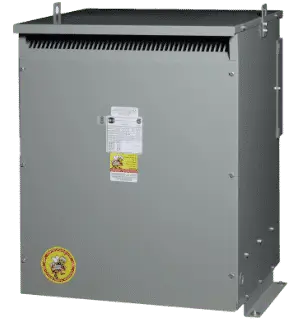
75 kVA Dry-Type Transformers – 700+ Configurations Ready to Ship.
Single-phase and three-phase units from 450 to 750 lbs. Standard 480V to 208Y/120V step-down plus K-Factor, harmonic-mitigating, and drive isolation models. Copper or aluminum windings.
✔ NEMA 1, 2, and 3R enclosures in stock ✔ IEEE C57.12.91 sound-level verified ✔ Reconditioned units backed by up to a 2-year warranty
Technical Specifications of a 75 kVA Transformer
The table below covers the full range of specifications available across the 75 KVA dry-type transformers we carry and source.
| Power Rating | 75 KVA |
| Transformer Type | Dry-Type (air-cooled) |
| Phase | Single-phase (1Ø) and Three-phase (3Ø) |
| Frequency | 50 Hz / 60 Hz |
| Temperature Rise | 50°C, 80°C, 115°C, or 150°C above 40°C ambient |
| Winding Material | Copper (Cu) or Aluminium (Al) |
| Enclosure Types | NEMA 1 (standard indoor), NEMA 2 (drip-proof), NEMA 3R (outdoor/rainproof) |
| Insulation Class | Class H (220°C) |
| Compliance | UL Listed, DOE Energy Efficient (TP-1 / DOE 2016), CSA available |
| Condition Available | New, Reconditioned, Used and Refurbished |
| Service Coverage | Ships across all 50 U.S. states |
75 KVA Transformer Weight
A 75 KVA dry-type transformer typically weighs between 450 and 750 lbs depending on phase (single vs three), winding material (copper vs aluminium), enclosure type, and manufacturer. Three-phase copper-wound NEMA 3R units are at the heavier end of the range
• Three-phase copper: 550–720 lbs
• Three-phase aluminum: 460–600 lbs
• Single-phase copper: 450–580 lbs
• NEMA 3R enclosure adds: 50–100 lbs
75 kVA Transformer Amps
The ampere output of a 75 KVA transformer depends on the secondary voltage and phase. Use these formulas: Three-phase: Amps = 75,000 ÷ (Volts × 1.732) | Single-phase: Amps = 75,000 ÷ Volts
| Secondary Voltage | Phase | Calculation | Output Amps |
|---|---|---|---|
| Three-Phase (3Ø) Output | |||
| 208Y/120V | 3Ø | 75,000 ÷ (208 × 1.732) | ~208 A |
| 240V | 3Ø | 75,000 ÷ (240 × 1.732) | ~180 A |
| 480V | 3Ø | 75,000 ÷ (480 × 1.732) | ~90 A |
| 600V | 3Ø | 75,000 ÷ (600 × 1.732) | ~72 A |
| 380Y/220V | 3Ø | 75,000 ÷ (380 × 1.732) | ~114 A |
| 415Y/240V | 3Ø | 75,000 ÷ (415 × 1.732) | ~104 A |
| Single-Phase (1Ø) Output | |||
| 120/240V | 1Ø | 75,000 ÷ 240 | ~313 A |
| 240V | 1Ø | 75,000 ÷ 240 | ~313 A |
| 480V | 1Ø | 75,000 ÷ 480 | ~156 A |
| 120V | 1Ø | 75,000 ÷ 120 | ~625 A |
75 KVA Step-Up vs. Step-Down Transformer
A 75 KVA step-down transformer reduces voltage most commonly from 480V to 208Y/120V. A 75 KVA step-up transformer increases voltage, for example from 208V to 480V. In most cases the same transformer unit can serve either function; the designation depends on which winding is connected to the source. A 75 KVA dry-type transformer typically weighs between 450 and 750 lbs, depending on configuration.
Common Step-Down Configurations
| Primary (Source) | Secondary (Load) | Phase | Typical Application |
|---|---|---|---|
| 480V | 208Y/120V Most Popular | 3Ø | Commercial building panels, office fitouts |
| 480V | 240/120V | 1Ø | Residential-style service in commercial builds |
| 480V | 480Y/277V | 3Ø | Lighting systems, isolation applications |
| 600V | 480V | 3Ø | Canadian service entry, industrial retrofit |
| 4160V | 480V / 208Y/120V | 3Ø | Medium-voltage distribution step-down |
| 2400V | 480V / 208Y/120V | 3Ø | Older facility distribution systems |
Common Step-Up Configurations
| Primary (Source) | Secondary (Load) | Phase | Typical Application |
|---|---|---|---|
| 208V | 480V | 3Ø | Powering 480V equipment from 208V service |
| 240V | 480V | 1Ø or 3Ø | VFD feeds, motor starters requiring higher voltage |
| 480V | 600V | 3Ø | Equipment rated for Canadian 600V service |
Key Features of Our 75 kVA Dry-Type Transformers
• Designed for indoor and Outdoor installations with compact footprint
• Low maintenance operation with no liquid handling required
• Reliable voltage transformation for stable system performance
• Multiple voltage configurations for system flexibility
• Efficient thermal performance for long service life
• Built to meet modern electrical standards and efficiency requirements
Applications of 75 kVA Dry Type Transformers
75 kVA transformers are widely used in:
• Commercial buildings and office facilities
• Manufacturing and industrial plants
• HVAC systems and mechanical equipment
• Lighting and panel distribution systems
• Data centers and electrical infrastructure
• Machinery and process equipment
Why Choose Bruce Electric for 75 kVA Transformers
Bruce Electric is a trusted supplier of 75 KVA dry-type transformers, offering a wide selection of new, surplus, reconditioned, and used units to meet diverse project needs. With over 50 years of industry experience, they provide fast access to in-stock transformers in multiple voltage configurations, phases, and NEMA enclosure types. Customers benefit from 20–50% cost savings, expert technical support for accurate sizing and configuration, and equipment that meets UL, DOE, and NEC standards. Backed by testing, warranty coverage, and nationwide shipping, Bruce Electric ensures reliable, cost-effective transformer solutions with quick turnaround times.
FAQs
Q1. What is the load capacity of a 75 kVA transformer?
A 75 kVA transformer can handle up to 75,000 VA (75 kVA) of apparent power. For continuous operation, it is recommended to load it to 80% capacity (~60 kVA) to prevent overheating and extend service life.
Q2. What does a 75 KVA transformer weigh?
A 75 KVA dry-type transformer typically weighs between 450 and 750 lbs (204–340 kg), depending on phase, winding material (copper or aluminium), and enclosure type such as NEMA 1 or NEMA 3R.
Q3. How many kW is 75 kVA?
The kW value of a 75 kVA transformer depends on the power factor. At a typical 0.8 power factor, 75 kVA equals 60 kW. At unity power factor (1.0), it equals 75 kW.
Q4. What is the difference between a 75 KVA step-up and step-down transformer?
A 75 KVA step-down transformer reduces voltage (e.g., 480V to 208Y/120V), while a step-up transformer increases voltage (e.g., 208V to 480V). The same transformer can often perform both functions depending on wiring configuration.
Q5. What frequency is a 75 KVA transformer rated for?
A 75 KVA transformer is typically rated for 60 Hz (standard in the U.S.) or 50 Hz (used internationally). Always match the transformer frequency with your power supply to ensure proper performance.