Shop by Categories
CLUTTER INTO PROFIT

Turn your used or unwanted transformers or circuit breakers into cash or credit
Equipment Purchase Program

100 kVA Transformers
A 100 kVA transformer is designed for commercial, industrial, institutional, OEM, and equipment-level power distribution applications requiring reliable voltage conversion and efficient localized power distribution. 100 kVA dry type transformers are commonly used in manufacturing facilities, commercial buildings, HVAC systems, healthcare facilities, packaging machinery, control systems, electrical distribution panels, and other applications where the transformer's voltage, phase, and capacity match the connected load.
At Bruce Electric Equipment Corp., we supply 100 kVA transformers in single-phase and three-phase configurations, with various primary and secondary voltages, winding materials, enclosure types, and transformer designs. Since 1973, Bruce Electric has specialized in dry type transformers and electrical distribution equipment from leading manufacturers including GE, ABB, Eaton, Hammond Power Solutions, Acme Electric, Schneider Electric / Square D, and SolaHD. Used, surplus, and reconditioned 100 kVA transformers are also available through our RFQ sourcing process.
Showing 1–15 of 98 results
Acme Electric 100 kVA Three Phase Dry Type Transformer: 440V - 220Y/127V (TF2201005S**)
SKU: TF2201005S**Manufacturer: Acme Electric
Weight: 725 lbs
KVA : 100
PHASE : THREE
PRIMARY VOLTAGE : 440
SECONDARY VOLTAGE : 220Y/127
HZ : 50
OLD PART NUMBER : TF -220100-5S
OTHER : 73-E
Acme Electric 100 kVA Three Phase Dry Type Transformer: 440V - 220Y/127V (TF220105S)
SKU: TF220105SManufacturer: Acme Electric
Weight: 245 lbs
KVA : 100
PHASE : THREE
PRIMARY VOLTAGE : 440
SECONDARY VOLTAGE : 220Y/127
HZ : 50/60
TYPE : Export Model
OLD PART NUMBER : TF-220100-5S **
OTHER : 73-I
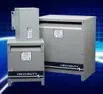
EGS/SOLAHD 100 kVA Single Phase Dry Type Transformer: 240 X 120V - 120/240V (ES5HB100S)
SKU: ES5HB100SManufacturer: EGS/SOLAHD
Weight: 980 lbs
KVA : 100
PHASE : SINGLE
PRIMARY VOLTAGE : 240 X 120
SECONDARY VOLTAGE : 120/240
WINDING MATERIAL : ALUMINUM
HZ : 60
TEMP RISE : 80
ENCLOSURE : NEMA 1
TYPE : VENTILATED DISTRIBUTION TRANSFORMER
TAPS : 2, 2.5% FCAN/4, 2.5% FCBN
EGS/SOLAHD 100 kVA Single Phase Dry Type Transformer: 240 X 120V - 120/240V (ES5HF100S)
SKU: ES5HF100SManufacturer: EGS/SOLAHD
Weight: 980 lbs
KVA : 100
PHASE : SINGLE
PRIMARY VOLTAGE : 240 X 120
SECONDARY VOLTAGE : 120/240
WINDING MATERIAL : ALUMINUM
HZ : 60
TEMP RISE : 115
ENCLOSURE : NEMA 1
TYPE : VENTILATED DISTRIBUTION TRANSFORMER
TAPS : 2, 2.5% FCAN/4, 2.5% FCBN
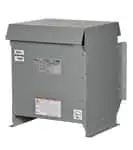
Hammond Power Solutions 100 kVA Single Phase Dry Type Transformer: 190/200/208/220V - 120/240V (SG3M0100XE0C)
SKU: SG3M0100XE0CManufacturer: Hammond Power Solutions
Weight: 700 lbs
KVA : 100
PHASE : SINGLE
WINDING MATERIAL : COPPER
TRADE NAME IF ANY : HPS SUPERSENTINEL
TEMP RISE : 150°C
PRIMARY VOLTAGE : 190/200/208/220
SECONDARY VOLTAGE : 120/240
TYPE : simple
Hammond Power Solutions 100 kVA Single Phase Dry Type Transformer: 240 X 480V - 120/240V (SG3N0100LE0C)
SKU: SG3N0100LE0CManufacturer: Hammond Power Solutions
Weight: 650 lbs
KVA : 100
PHASE : SINGLE
WINDING MATERIAL : COPPER
TRADE NAME IF ANY : HPS SUPERSENTINEL
TEMP RISE : 150°C
PRIMARY VOLTAGE : 240 X 480
SECONDARY VOLTAGE : 120/240
TYPE : simple
Hammond Power Solutions 100 kVA Single Phase Dry Type Transformer: 600V - 120/240V (SG3L0100PE0C)
SKU: SG3L0100PE0CManufacturer: Hammond Power Solutions
Weight: 650 lbs
KVA : 100
PHASE : SINGLE
WINDING MATERIAL : COPPER
TRADE NAME IF ANY : HPS SUPERSENTINEL
TEMP RISE : 150°C
PRIMARY VOLTAGE : 600
SECONDARY VOLTAGE : 120/240
TYPE : simple
Hammond Power Solutions 100 kVA Single Phase Dry Type Transformer: 190/200/208/220V - 120/240V (SG3M0100XE)
SKU: SG3M0100XEManufacturer: Hammond Power Solutions
Weight: 700 lbs
KVA : 100
PHASE : SINGLE
WINDING MATERIAL : ALUMINUM
TRADE NAME IF ANY : HPS SUPERSENTINEL
TEMP RISE : 150°C
PRIMARY VOLTAGE : 190/200/208/220
SECONDARY VOLTAGE : 120/240
TYPE : simple
Hammond Power Solutions 100 kVA Single Phase Dry Type Transformer: 240 X 480V - 120/240V (SG3N0100LE)
SKU: SG3N0100LEManufacturer: Hammond Power Solutions
Weight: 650 lbs
KVA : 100
PHASE : SINGLE
WINDING MATERIAL : ALUMINUM
TRADE NAME IF ANY : HPS SUPERSENTINEL
TEMP RISE : 150°C
PRIMARY VOLTAGE : 240 X 480
SECONDARY VOLTAGE : 120/240
TYPE : simple
Hammond Power Solutions 100 kVA Single Phase Dry Type Transformer: 416V - 120/240V (SG3L0100HE0C)
SKU: SG3L0100HE0CManufacturer: Hammond Power Solutions
Weight: 650 lbs
KVA : 100
PHASE : SINGLE
WINDING MATERIAL : COPPER
TRADE NAME IF ANY : HPS SUPERSENTINEL
TEMP RISE : 150°C
PRIMARY VOLTAGE : 416
SECONDARY VOLTAGE : 120/240
TYPE : simple
Hammond Power Solutions 100 kVA Single Phase Dry Type Transformer: 416V - 120/240V (SG3L0100HE)
SKU: SG3L0100HEManufacturer: Hammond Power Solutions
Weight: 650 lbs
KVA : 100
PHASE : SINGLE
WINDING MATERIAL : ALUMINUM
TRADE NAME IF ANY : HPS SUPERSENTINEL
TEMP RISE : 150°C
PRIMARY VOLTAGE : 416
SECONDARY VOLTAGE : 120/240
TYPE : simple
Hammond Power Solutions 100 kVA Single Phase Dry Type Transformer: 277V - 120/240V (SG3L0100FE0C)
SKU: SG3L0100FE0CManufacturer: Hammond Power Solutions
Weight: 650 lbs
KVA : 100
PHASE : SINGLE
WINDING MATERIAL : COPPER
TRADE NAME IF ANY : HPS SUPERSENTINEL
TEMP RISE : 150°C
PRIMARY VOLTAGE : 277
SECONDARY VOLTAGE : 120/240
TYPE : simple
Hammond Power Solutions 100 kVA Single Phase Dry Type Transformer: 277V - 120/240V (SG3L0100FE)
SKU: SG3L0100FEManufacturer: Hammond Power Solutions
Weight: 700 lbs
KVA : 100
PHASE : SINGLE
WINDING MATERIAL : ALUMINUM
TRADE NAME IF ANY : HPS SUPERSENTINEL
TEMP RISE : 150°C
PRIMARY VOLTAGE : 277
SECONDARY VOLTAGE : 120/240
TYPE : simple
Hammond Power Solutions 100 kVA Single Phase Dry Type Transformer: 208V - 120/240V (SG3L0100BE0C)
SKU: SG3L0100BE0CManufacturer: Hammond Power Solutions
Weight: 650 lbs
KVA : 100
PHASE : SINGLE
WINDING MATERIAL : COPPER
TRADE NAME IF ANY : HPS SUPERSENTINEL
TEMP RISE : 150°C
PRIMARY VOLTAGE : 208
SECONDARY VOLTAGE : 120/240
TYPE : simple
Hammond Power Solutions 100 kVA Single Phase Dry Type Transformer: 208V - 120/240V (SG3L0100BE)
SKU: SG3L0100BEManufacturer: Hammond Power Solutions
Weight: 650 lbs
KVA : 100
PHASE : SINGLE
WINDING MATERIAL : ALUMINUM
TRADE NAME IF ANY : HPS SUPERSENTINEL
TEMP RISE : 150°C
PRIMARY VOLTAGE : 208
SECONDARY VOLTAGE : 120/240
TYPE : simple
100 kVA Transformer Specifications
A 100 kVA transformer is rated to deliver 100,000 volt-amperes (VA) of apparent power under its specified operating conditions. The exact electrical and mechanical characteristics of a transformer vary based on voltage ratings, phase configuration, insulation system, enclosure design, cooling method, and manufacturer specifications. For installation and engineering purposes, the transformer nameplate and certified submittal drawings should always be reviewed.
| Specification | Typical Range |
|---|---|
| Power Rating | 100 kVA (100000 VA) |
| Phase | Single Phase / Three Phase |
| Frequency | 50 Hz / 60 Hz |
| Primary Voltage | 208V, 240V, 480V, 600V, 2400V, 4160V and others |
| Secondary Voltage | 120V, 208Y/120V, 240V, 480Y/277V, 480V and others |
| Cooling Method | Dry Type / Air-Cooled |
| Insulation Class | 180°C or 220°C system |
| Temperature Rise | 80°C, 115°C, or 150°C |
| Enclosure Options | Open, NEMA 1, NEMA 3R, and others |
| Mounting | Floor Mounted (typical) |
| Winding Material | Copper or Aluminum |
How Many Amps Can a 100 kVA Transformer Handle?
The full-load current of a 100 kVA transformer depends on voltage and phase.
For a single-phase transformer: Amps = 100,000 ÷ Volts
For a three-phase transformer: Amps = 100,000 ÷ (Volts × 1.732)
For example, a 100 kVA transformer operating at 480V has a calculated full-load current of approximately 208 A for single-phase operation and 120 A for three-phase operation.
100 kVA Transformer Amperage Chart
| Secondary Voltage | Three-Phase Full-Load Amps | Single-Phase Full-Load Amps |
|---|---|---|
| 120V | 481 A | 833 A |
| 208V | 278 A | 481 A |
| 240V | 241 A | 417 A |
| 277V | 208 A | 361 A |
| 480V | 120 A | 208 A |
| 600V | 96 A | 167 A |
Note: These values represent calculated full-load current at the transformer’s rated 100 kVA capacity. Actual operating current depends on the connected load and may be lower than the values shown above. For dry-type transformers rated 600V or less, overcurrent protection sizing should follow NEC Article 450.3(B).
100 kVA Transformer Voltage Configurations
A 100 kVA transformer can be supplied in a variety of voltage and phase configurations to accommodate different power distribution requirements. The appropriate configuration depends on the available source voltage, the voltage required by the connected equipment, and the overall design of the electrical system.
Single Phase 100 kVA Transformer
A 100 kVA single phase transformer is commonly used where power is distributed through a single-phase electrical system or where dedicated equipment requires single-phase voltage transformation. Common voltage configurations vary by application and may include combinations such as:
1. 480V to 240V
2. 480V to 120/240V
3. 240V to 120/240V
4. Custom voltage configurations
Three Phase 100 kVA Transformer
A 100 kVA transformer 3 phase configuration is commonly selected for commercial and industrial power distribution systems where three-phase service is required. These transformers are used to supply distribution equipment, motor loads, mechanical systems, manufacturing equipment, and other three-phase electrical loads. Common three-phase voltage configurations include:
1. 480V to 240/120V
2. 480V to 440Y/254V
3. 208V to 400Y/231V
4. Custom voltage combinations
The appropriate voltage configuration should be selected based on source voltage, utilization voltage requirements, phase configuration, and the characteristics of the connected load.
Common 100 kVA Transformer Configurations
A 100 kVA transformer may be configured for the following services:
1. Step-Up Transformers. A 100 kVA step up transformer raises voltage from a lower level to a higher level while maintaining the same apparent power rating. These transformers are commonly used when equipment, distribution systems, or electrical infrastructure require a higher operating voltage than the available source.
2. Step-Down Transformers. A 100 kVA step down transformer reduces incoming voltage to a lower utilization voltage suitable for equipment and facility loads. These transformers are widely used throughout commercial and industrial power distribution systems.
3. General-Purpose Distribution Transformers: A 100 kVA general-purpose transformer distributes standard commercial and light industrial power, typically stepping voltage down to 120/240V or 208Y/120V for panels, lighting, and mechanical loads. These are the most widely used 100 kVA configurations and are commonly supplied in NEMA 1 or NEMA 2 enclosures for indoor installation.
4. Industrial Control Transformers: A 100 kVA control transformer is sized for machine and control panel power rather than facility-wide distribution, typically running a lower temperature rise than general-purpose units. These transformers are commonly used to power control circuits, relays, and automation equipment within a piece of machinery rather than serving broader building loads.
5. Isolation Transformers: A 100 kVA isolation transformer electrically separates the primary and secondary circuits while transferring power between them through electromagnetic induction. Depending on the design, the transformer may output the same voltage as the input or perform voltage conversion while maintaining electrical isolation, and is often supplied in a NEMA 3R enclosure for indoor or outdoor use.
100 kVA Transformer Weight and Dimensions
Weight and footprint depend on winding material, enclosure, and voltage class, so treat these as planning references, not spec sheet numbers:
1. Aluminium-wound units: roughly 700–1,300 lbs.
2. Copper-wound units: roughly 900–1,800 lbs.
3. Typical footprint: 30–42 in. wide, 24–36 in. deep, 40–60 in. tall.
Medium-voltage units in heavy-duty NEMA 3R enclosures run heavier. Always confirm dimensions and weight from the manufacturer’s certified drawing before planning rigging, floor loading, or doorway clearances.
Applications of 100 kVA Dry Type Transformers
100 kVA transformers are widely used across commercial, industrial, infrastructure, OEM, and utility applications requiring dependable medium- and low-voltage power distribution.
Common applications include:
1. Commercial buildings and tenant improvements
2. Manufacturing and industrial facilities
3. HVAC and mechanical equipment
4. Production and automation equipment
5. Packaging and material-handling machinery
6. Industrial control systems
7. Educational and institutional facilities
8. Healthcare and support facilities
9. Dedicated equipment distribution
10. Electrical system upgrades and replacement projects
11. OEM equipment installations
How to Select the Right 100 kVA Transformer
Before selecting a 100 kVA transformer, verify the following:
1. Confirm Capacity Requirements. Evaluate the connected load, anticipated demand, motor starting requirements, and future expansion plans to determine whether a 100 kVA transformer provides sufficient capacity for the application.
2. Verify Primary and Secondary Voltage Requirements. Confirm the available source voltage and the voltage required by the connected equipment. Proper voltage matching is essential for equipment compatibility and system performance.
3. Identify the Required Phase Configuration. Determine whether the application requires a 100 kVA single phase transformer or a 100 kVA transformer 3 phase configuration. The transformer should match the electrical characteristics of the system it serves.
4. Select the Appropriate Transformer Type. Review whether the application requires a standard distribution transformer, step-down transformer, step-up transformer, or another specialized configuration.
5. Verify Frequency Compatibility. Confirm that the transformer is suitable for the operating frequency of the electrical system, typically 50 Hz or 60 Hz.
6. Verify Overcurrent Protection and Connection Requirements. Review conductor terminations, overcurrent protection requirements, and grounding arrangements to ensure compatibility with the electrical system.
7. Evaluate Voltage Adjustment Requirements. Determine whether tap connections are needed to accommodate expected voltage variations within the electrical system.
8. Consider Winding Material Preferences. Review whether copper or aluminum winding are preferred based on project requirements, operating conditions, and procurement considerations.
9. Review Environmental Conditions. Consider installation location, enclosure requirements, ambient temperature, ventilation, moisture exposure, and other environmental conditions that may influence transformer selection.
100 kVA Transformer Installation Considerations
A 100 kVA dry type transformer must be installed according to its manufacturer’s instructions, applicable electrical codes, project specifications, and the requirements of the installation environment.
Before energization, verify:
1. Transformer nameplate voltage and phase
2. Tap settings, where applicable
3. Conductor and terminal compatibility
4. Grounding and bonding requirements
5. Overcurrent protection
6. Structural support and floor loading
7. Required working clearances
8. Ventilation and heat dissipation
9. Enclosure suitability
10. Shipping or handling damage
Adequate airflow is particularly important for dry type transformers because operating losses produce heat that must be dissipated. Manufacturer-specified clearances and ventilation requirements should always be followed.
Why Buy 100 kVA Transformers from Bruce Electric?
Bruce Electric Equipment Corp. supplies 100 kVA transformers for commercial, industrial, institutional, and infrastructure applications across a wide range of voltage and configuration requirements. Whether you are sourcing equipment for a replacement project, facility expansion, electrical upgrade, or new installation, our team can assist with identifying available transformer solutions that meet your specifications.
1. Broad Inventory: New, surplus, used and reconditioned units from multiple manufacturers.
2. Multiple Configurations: Single-phase, three-phase, isolation, step-up, and step-down options.
3. Specification Support: Assistance with voltage, phase, enclosure, winding, and application requirements.
4. RFQ Support: Help sourcing suitable transformers for replacements, upgrades, expansions, and new installations.
Frequently Asked Questions
Q1. Can a 100 kVA transformer be connected to a generator?
Yes. A 100 kVA transformer can be used with generator-powered systems when the voltage, frequency, phase configuration, and capacity requirements are compatible. Generator applications should also consider voltage regulation characteristics, motor starting loads, and overall system design.
Q2. What information should be provided when requesting a quote for a 100 kVA transformer?
Provide the primary and secondary voltage, phase, frequency, enclosure, installation environment, application, and equipment condition (new, used, surplus, or reconditioned).
Q3. What affects 100 kVA transformer lead time?
Lead time depends on configuration, voltage, enclosure, manufacturer availability, customization, and inventory status. Non-standard specifications may require additional sourcing or manufacturing time.
Q4. How long does a 100 kVA dry type transformer last?
A 100 kVA dry-type transformer typically lasts between 20 to 30 years. Regular maintenance, clean operating environments, and proper load management help it reach or exceed this expected lifespan.