Shop by Categories
CLUTTER INTO PROFIT

Turn your used or unwanted transformers or circuit breakers into cash or credit
Equipment Purchase Program

750 kVA Transformers
A 750 kVA transformer is a large-capacity dry-type transformer rated at 750,000 volt-amperes. These transformers are commonly used in commercial, industrial, and institutional facilities that require reliable power distribution for large electrical loads.
Bruce Electric supplies and sources new 750 kVA dry-type transformers in three-phase and single-phase configurations, including step-down, step-up, isolation, drive isolation, K-factor-rated, autotransformer, low-voltage, and medium-voltage configurations. Available options include copper or aluminium windings, indoor and outdoor enclosures, and manufacturers such as Federal Pacific, Rex Power Magnetics, General Electric, Hammond Power Solutions, Jefferson Electric, Acme Electric and more.
New 750 kVA units are available on website through RFQ process. Used and reconditioned units are not listed online but are available through our RFQ process. Contact our team with your voltage, phase, and enclosure requirements to check current availability.
Showing 1–15 of 138 results
KVA : 750
PHASE : THREE
PRIMARY VOLTAGE : 480
SECONDARY VOLTAGE : 208Y/120
HZ : 60
OLD PART NUMBER : TP1-53321-3S
OTHER : 80G
KVA : 750
PHASE : THREE
PRIMARY VOLTAGE : 480
SECONDARY VOLTAGE : 240D
HZ : 60
OLD PART NUMBER : TP1-53350-3S
OTHER : 31E
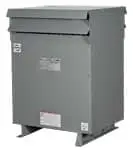
Hammond Power Solutions 750 kVA Three Phase Dry Type Transformer: 240V - 480Y, 277V (SG3A0750DK)
SKU: SG3A0750DKManufacturer: Hammond Power Solutions
Weight: 4100 lbs
KVA : 750
PHASE : THREE
PRIMARY VOLTAGE : 240
SECONDARY VOLTAGE : 480Y, 277
WINDING MATERIAL : ALUMINUM
HZ : 60
TEMP RISE : 150
ENCLOSURE : NEMA 3R
TYPE : ENERGY EFFICIENT GENERAL PURPOSE DISTRIBUTION
OTHER : SCD61
TRADE NAME : HPS SENTINEL G
Hammond Power Solutions 750 kVA Three Phase Dry Type Transformer: 480V - 240, 120CTV (SG3C0750KD)
SKU: SG3C0750KDManufacturer: Hammond Power Solutions
Weight: 4100 lbs
KVA : 750
PHASE : THREE
PRIMARY VOLTAGE : 480
SECONDARY VOLTAGE : 240, 120CT
WINDING MATERIAL : ALUMINUM
HZ : 60
TEMP RISE : 150
ENCLOSURE : NEMA 3R
TYPE : ENERGY EFFICIENT GENERAL PURPOSE DISTRIBUTION
OTHER : SCD22
TAPS : 2+4-2.5%
TRADE NAME : HPS SENTINEL G
Hammond Power Solutions 750 kVA Three Phase Dry Type Transformer: 240V - 120, 208YV (SG3A0750DB)
SKU: SG3A0750DBManufacturer: Hammond Power Solutions
Weight: 4100 lbs
KVA : 750
PHASE : THREE
PRIMARY VOLTAGE : 240
SECONDARY VOLTAGE : 120, 208Y
WINDING MATERIAL : ALUMINUM
HZ : 60
TEMP RISE : 150
ENCLOSURE : NEMA 3R
TYPE : ENERGY EFFICIENT GENERAL PURPOSE DISTRIBUTION
OTHER : SCD60
TRADE NAME : HPS SENTINEL G
Hammond Power Solutions 750 kVA Three Phase Dry Type Transformer: 600V - 480Y/277V (Special)
SKU: SpecialManufacturer: Hammond Power Solutions
Weight: 6260 lbs
KVA : 750
PHASE : THREE
WINDING MATERIAL : ALUMINUM
TRADE NAME IF ANY : HPS SUPERCENTURION
PRIMARY VOLTAGE : 600
SECONDARY VOLTAGE : 480Y/277
TYPE : simple
Hammond Power Solutions 750 kVA Three Phase Dry Type Transformer: 480V - 120, 208YV (SG3A0750KB0C)
SKU: SG3A0750KB0CManufacturer: Hammond Power Solutions
Weight: 4050 lbs
KVA : 750
PHASE : THREE
PRIMARY VOLTAGE : 480
SECONDARY VOLTAGE : 120, 208Y
WINDING MATERIAL : COPPER
HZ : 60
TEMP RISE : 150
ENCLOSURE : NEMA 3R
TYPE : ENERGY EFFICIENT GENERAL PURPOSE DISTRIBUTION
OTHER : SCD20
TAPS : 2+4-2.5%
TRADE NAME : HPS SENTINEL G
Hammond Power Solutions 750 kVA Three Phase Dry Type Transformer: 480V - 240, 120 CTV (SG3C0750KD0C)
SKU: SG3C0750KD0CManufacturer: Hammond Power Solutions
Weight: 4050 lbs
KVA : 750
PHASE : THREE
PRIMARY VOLTAGE : 480
SECONDARY VOLTAGE : 240, 120 CT
WINDING MATERIAL : COPPER
HZ : 60
TEMP RISE : 150
ENCLOSURE : NEMA 3R
TYPE : ENERGY EFFICIENT GENERAL PURPOSE DISTRIBUTION
OTHER : SCD22
TAPS : 2+4-2.5%
TRADE NAME : HPS SENTINEL G
Hammond Power Solutions 750 kVA Three Phase Dry Type Transformer: 480V - 480Y, 277V (SG3A0750KK)
SKU: SG3A0750KKManufacturer: Hammond Power Solutions
Weight: 4100 lbs
KVA : 750
PHASE : THREE
PRIMARY VOLTAGE : 480
SECONDARY VOLTAGE : 480Y, 277
WINDING MATERIAL : ALUMINUM
HZ : 60
TEMP RISE : 150
ENCLOSURE : NEMA 3R
TYPE : ENERGY EFFICIENT GENERAL PURPOSE DISTRIBUTION
OTHER : SCD20
TAPS : 2+4-2.5%
TRADE NAME : HPS SENTINEL G
Hammond Power Solutions 750 kVA Three Phase Dry Type Transformer: 240V - 480Y, 277V (SG3A0750DK0C)
SKU: SG3A0750DK0CManufacturer: Hammond Power Solutions
Weight: 4050 lbs
KVA : 750
PHASE : THREE
PRIMARY VOLTAGE : 240
SECONDARY VOLTAGE : 480Y, 277
WINDING MATERIAL : COPPER
HZ : 60
TEMP RISE : 150
ENCLOSURE : NEMA 3R
TYPE : ENERGY EFFICIENT GENERAL PURPOSE DISTRIBUTION
OTHER : SCD61
TRADE NAME : HPS SENTINEL G
Hammond Power Solutions 750 kVA Three Phase Dry Type Transformer: 208V - 480Y, 277V (SG3A0750BK0C)
SKU: SG3A0750BK0CManufacturer: Hammond Power Solutions
Weight: 4050 lbs
KVA : 750
PHASE : THREE
PRIMARY VOLTAGE : 208
SECONDARY VOLTAGE : 480Y, 277
WINDING MATERIAL : COPPER
HZ : 60
TEMP RISE : 150
ENCLOSURE : NEMA 3R
TYPE : ENERGY EFFICIENT GENERAL PURPOSE DISTRIBUTION
OTHER : SCD61
TRADE NAME : HPS SENTINEL G
Hammond Power Solutions 750 kVA Three Phase Dry Type Transformer: 240V - 120, 208YV (SG3A0750DB0C)
SKU: SG3A0750DB0CManufacturer: Hammond Power Solutions
Weight: 4050 lbs
KVA : 750
PHASE : THREE
PRIMARY VOLTAGE : 240
SECONDARY VOLTAGE : 120, 208Y
WINDING MATERIAL : COPPER
HZ : 60
TEMP RISE : 150
ENCLOSURE : NEMA 3R
TYPE : ENERGY EFFICIENT GENERAL PURPOSE DISTRIBUTION
OTHER : SCD60
TRADE NAME : HPS SENTINEL G
Hammond Power Solutions 750 kVA Three Phase Dry Type Transformer: 208V - 120, 208YV (SG3A0750BB)
SKU: SG3A0750BBManufacturer: Hammond Power Solutions
Weight: 4100 lbs
KVA : 750
PHASE : THREE
PRIMARY VOLTAGE : 208
SECONDARY VOLTAGE : 120, 208Y
WINDING MATERIAL : ALUMINUM
HZ : 60
TEMP RISE : 150
ENCLOSURE : NEMA 3R
TYPE : ENERGY EFFICIENT GENERAL PURPOSE DISTRIBUTION
OTHER : SCD60
TRADE NAME : HPS SENTINEL G
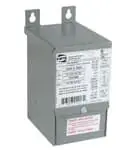
Hammond Power Solutions 750 kVA Single Phase Dry Type Transformer: 240 X 480V - 24/48V (QC75DTCB)
SKU: QC75DTCBManufacturer: Hammond Power Solutions
Weight: 18 lbs
KVA : 750
PHASE : SINGLE
PRIMARY VOLTAGE : 240 X 480
SECONDARY VOLTAGE : 24/48
ENCLOSURE : NEMA 3R HEAVY DUTY
TYPE : BUCK BOOST TRANSFORMER
TRADE NAME : HPS UNIVERSAL
Hammond Power Solutions 750 kVA Single Phase Dry Type Transformer: 480V - 120/240V (QC75LEKB)
SKU: QC75LEKBManufacturer: Hammond Power Solutions
Weight: 24 lbs
KVA : 750
PHASE : SINGLE
PRIMARY VOLTAGE : 480
SECONDARY VOLTAGE : 120/240
WINDING MATERIAL : ALUMINUM
HZ : 60
TEMP RISE : 115
ENCLOSURE : NEMA 3R
TYPE : INDUSTRIAL ENCAPSULATED
OTHER : SCD1
TAPS : 2 2.5% ABOVE AND 2 2.5% BELOW
TRADE NAME : HPS TITAN
750 kVA Transformer Specifications
| Specification | Typical Value |
|---|---|
| kVA Rating | 750 kVA |
| Phase | Three-Phase and Single-Phase |
| Frequency | 50/60 Hz (control transformers); 60 Hz (distribution) |
| Primary Voltage | 120V–600V (low voltage); 2400V–7200V (medium voltage) |
| Secondary Voltage | 208Y/120V, 240D/120CT, 480Y/277V, and other configurations |
| Winding Material | Copper or Aluminium |
| Temperature Rise | 55°C, 80°C, 115°C, or 150°C |
| Insulation Class | Commonly 220°C Insulation Class |
| Enclosure Types | Open Style, NEMA 1, NEMA 2, NEMA 3R, NEMA 3R Heavy Duty |
| Cooling | Dry-Type, Air-Cooled (AN) |
| Mounting | Floor Mounted |
Need certified outline drawings, nameplate data, or help matching a replacement to your existing system? Contact our team – we’ll help you confirm the right specification before you order.
How Many Amps Can a 750 kVA Transformer Handle?
Single-phase: Amps = (kVA × 1,000) ÷ Volts
Three-phase: Amps = (kVA × 1,000) ÷ (Volts × 1.732)
| Voltage | Single-Phase (A) | Three-Phase (A) |
|---|---|---|
| 120V | 6,250 A | — |
| 208V | 3,606 A | 2,083 A |
| 240V | 3,125 A | 1,804 A |
| 277V | 2,708 A | 1,563 A |
| 480V | 1,563 A | 902 A |
| 600V | 1,250 A | 722 A |
Per NEC 450.3(B) (transformers rated 1000V or less), primary-only overcurrent protection is generally sized at 125% of rated primary current; where both primary and secondary protection are provided, primary protection up to 250% is permitted with secondary protection at 125%. Confirm requirements against the NEC edition adopted in your jurisdiction and verify conductor sizing per NEC Table 310.15.
750 kVA Voltage Configurations Available
Three-Phase Distribution
| Primary Voltage | Secondary Voltage | Application Notes |
|---|---|---|
| 480V | 208Y/120V | Most common commercial/industrial step-down |
| 480V | 480Y/277V | Isolation transformer, no voltage change |
| 480V | 240D/120CT | Center-tapped delta for industrial motor loads |
| 480V | 400Y/231V | Drive isolation, international voltage matching |
| 240V | 208Y/120V, 480Y/277V | Step-down or step-up depending on need |
| 208V | 208Y/120V, 480Y/277V | Isolation or step-up for higher-voltage equipment |
| 600V | 208Y/120V, 240V | 600V-primary and Canadian facilities |
| 600V | 480Y/277V | 600V-primary and Canadian facilities |
Medium-Voltage Distribution
| Primary Voltage | Secondary Voltage | Application Notes |
|---|---|---|
| 2400V | 208Y/120V, 480Y/277V, 600V | Medium-voltage utility/plant step-down |
| 3300V, 4800V, 6600V, 7200V | 120/240V | Medium-voltage, single-phase secondary |
| 4160V | 120/240V, 208Y/120V, 480Y/277V, 600V | Medium-voltage utility/plant step-down |
Single-Phase (Control, Lighting & Buck-Boost)
| Primary Voltage | Secondary Voltage | Application Notes |
|---|---|---|
| 120 × 240V | 24V | Industrial control power |
| 208/230/460V, 208/277/380V | 115V | Machine and panel control circuits |
| 380–600V | 115/230V | Export and international control power |
| 120V | 12V, 24V | Low-voltage lighting transformers |
| 480V, 600V | 120/240V | Industrial encapsulated / control-power distribution |
| 240 × 480V | 24/48V | Buck-boost voltage correction |
Availability varies by manufacturer and configuration. Contact Bruce Electric for configurations not shown.
Available 750 kVA Transformer Configurations
A 750 kVA transformer is available in several configurations to support different power distribution, voltage conversion, and equipment requirements. The selected configuration depends on the facility voltage system, connected loads, installation environment, and application requirements.
1. Step-Down Configurations. A 750 kVA step-down transformer reduces a higher source voltage to a lower utilization voltage required by downstream equipment and facility distribution systems. The most common configuration is 480V→208Y/120V, widely used in commercial buildings, industrial facilities, healthcare campuses, and manufacturing plants.
2. Step-Up Configurations. A 750 kVA step-up transformer increases a lower source voltage to a higher operating voltage required by equipment or distribution systems. Available configurations include 208V→480Y/277V and 240V→480Y/277V, commonly used for industrial equipment and facility expansions requiring higher distribution voltage.
3. Isolation Transformers. A 750 kVA isolation transformer, such as the 480V→480Y/277V configuration we stock, is a two-winding design optimized for electrical noise reduction and sensitive equipment protection beyond the basic isolation any two-winding transformer provides. These units are commonly used to protect sensitive electronics, improve power quality, and isolate dedicated equipment from the broader distribution system.
4. Drive Isolation Transformers. A 750 kVA drive isolation transformer isolates variable frequency drives (VFDs) from the rest of the electrical distribution system, helping protect drive electronics and reduce electrical noise. We carry a General Electric 480V→400Y/231V unit in this category.
5. Autotransformers. A 750 kVA autotransformer is used where a modest voltage adjustment is needed rather than full electrical isolation, since autotransformers share a common winding between primary and secondary. Our inventory includes a Rex Power Magnetics 480V→440V three-phase autotransformer with the neutral brought out.
6. Energy-Efficient K-Factor Units. These transformers are rated to handle the heat generated by harmonic currents from nonlinear loads such as VFDs and switch-mode power supplies, without the overheating risk standard general-purpose units face under sustained harmonic loading. Hammond Power Solutions supplies this line.
Weight & Dimensions
Weight and footprint vary by winding material, voltage class, and enclosure. Dry-type 750 kVA transformers generally weigh in the range of roughly 3,500–8,500 lbs industry-wide depending on voltage class and construction, this is a general engineering range rather than a verified Bruce Electric catalog specification. Note that shipping weight can differ from installed operating weight, so both figures matter for planning. Always confirm exact weight and dimensions from the manufacturer’s certified outline drawing before rigging, floor loading calculations, or installation planning never rely on general ranges for structural or transport decisions.
Applications of 750 kVA Dry Type Transformers
1. Industrial Manufacturing: Production equipment, motor control centers, plant-wide distribution.
2. Commercial Buildings: Main distribution, HVAC power supply, tenant electrical systems.
3. Data Centers: UPS and critical power distribution, capacity expansion projects.
4. Healthcare & Institutional Facilities: Hospital and campus distribution, laboratory infrastructure.
5. Water & Infrastructure: Pump stations, treatment plants, utility-connected facilities.
6. Renewable Energy: Solar and battery energy storage system (BESS) interconnection, particularly with the medium-voltage line.
How to Select the Right 750 kVA Transformer
1. Confirm voltage and phase – verify available primary voltage, required secondary voltage, and phase configuration against connected equipment.
2. Evaluate load characteristics – review demand profile, motor starting requirements, and future expansion needs.
3. Review tap range – check FCAN/FCBN tap settings against expected supply voltage variation.
4. Select enclosure and winding material – match indoor/outdoor environment; copper offers lower losses; aluminium is more cost-effective.
5. Confirm installation requirements – verify weight, dimensions, ventilation clearances, and terminal access, especially for replacement projects.
750 kVA Transformer Installation Considerations
A 750 kVA transformer can weigh several thousand pounds and generates substantial heat under full load. Confirm floor loading and structural capacity before installation and maintain manufacturer-specified clearances for airflow. Coordinate primary and secondary conductor routing, termination locations, and phase sequence before installation. Match transformer ratings with upstream protection devices and downstream equipment per NEC Article 450. Complete inspection and commissioning connections, tap settings, insulation resistance, and grounding before energization.
Why Source from Bruce Electric?
With over 50 years of experience in electrical power distribution. Bruce Electric supplies 750 kVA dry-type transformers for replacement projects, facility expansions, and new installations. We help customers identify the right 750 kVA transformer based on voltage, phase, enclosure, and application requirements, with support for new, surplus, used, and reconditioned equipment when available.
Frequently Asked Questions
Q1. How much does a 750 kVA transformer cost?
The cost of a 750 kVA transformer depends on transformer type, voltage configuration, manufacturer, winding material, enclosure requirements, condition, lead time, and availability.
Q2. What is the load capacity of a 750 kVA transformer?
A 750 kVA transformer is rated as delivering up to 750,000 volt-amperes (VA) of apparent power under specified operating conditions. Actual loading depends on system voltage, phase configuration, power factor, connected loads, and overall operating conditions.
Q3. How much does a 750 kVA transformer weigh?
Typically, 3,500–8,500 lbs depending on voltage class, winding material, and enclosure. Shipping weight may differ from installed weight, so always confirm exact figures from the manufacturer’s certified drawing.
Q4. Can a 750 kVA transformer be installed outdoors?
Yes, when supplied in a NEMA 3R or NEMA 3R Heavy Duty enclosure rated for weather exposure.
Q5. Are 750 kVA transformers available in three-phase configurations?
Yes. Three-phase 750 kVA transformers are the most common configuration for industrial facilities, commercial buildings, institutional campuses, and infrastructure applications. They support efficient power distribution and balanced three-phase electrical loads.
Technical Reading
1. Dry Type Transformer Testing & Troubleshooting Guide
2. Dry Type Transformer Cooling: Natural Air vs. Forced Air
3. Transformer Losses & Efficiency Guide
4. Understanding Transformer Taps and Their Role in Voltage Regulation