VPI vs Cast Coil Transformer: Which Dry Type Transformer Is Better?

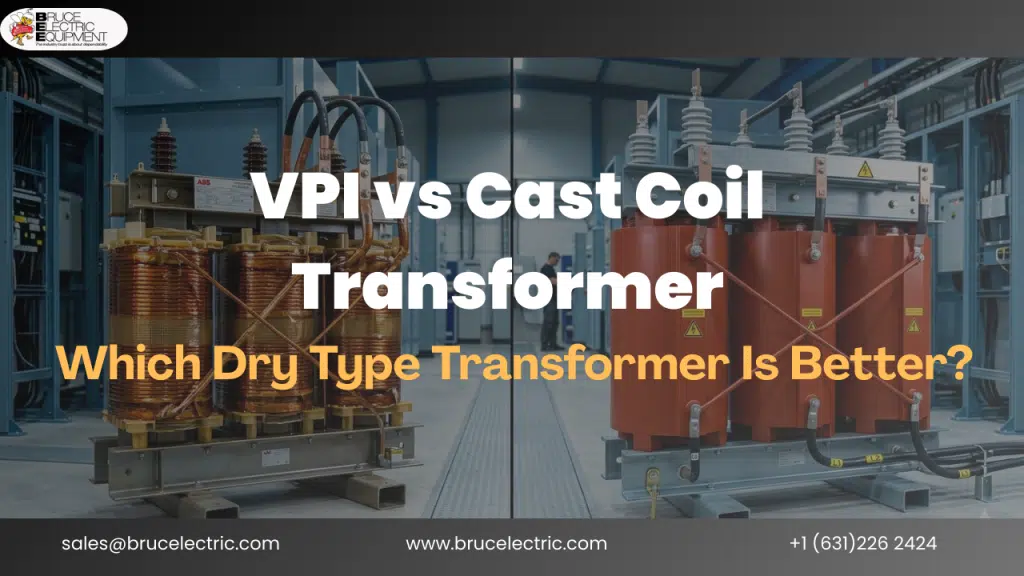
Choosing between a VPI transformer and a cast coil transformer is one of the most consequential decisions an electrical engineer or procurement manager will make on any power distribution project. Both are classified as dry-type transformers safer, more environmentally friendly alternatives to oil-filled units, but their construction, performance characteristics, and ideal applications differ in ways that can significantly affect your project’s budget, maintenance schedule, and long-term reliability.
This guide delivers what most comparison pages don’t: a technically detailed, application-specific breakdown of VPI vs cast coil transformer technology, complete with performance data, lifecycle cost analysis, and an environment-based selection matrix.
What Is a VPI Dry Type Transformer?
A VPI (Vacuum Pressure Impregnated) transformer is a dry-type transformer in which the windings are insulated by saturating them with a polyester or epoxy-based resin under alternating cycles of vacuum and pressure. This manufacturing process forces the resin deep into every gap within the winding, eliminating air pockets and significantly improving dielectric strength, mechanical stability, and thermal performance.
The result is a transformer with excellent insulation integrity, high resistance to electrical stress, and strong performance in standard commercial and industrial environments. VPI transformers are typically rated to Class F (155°C) or Class H (180°C) insulation systems and are available up to 30 MVA. Their open-wound design allows better airflow for heat dissipation and makes them easier to inspect, repair, and customize for non-standard ratings.
VPI Transformer Advantages:
• Lower initial cost
• Better repairability
• Strong heat dissipation
• Suitable for controlled indoor environments
• Lighter weight compared to cast coil units
VPI technology is widely used in commercial buildings, schools, hospitals, and indoor industrial facilities where moisture and contamination are limited.
Product Category
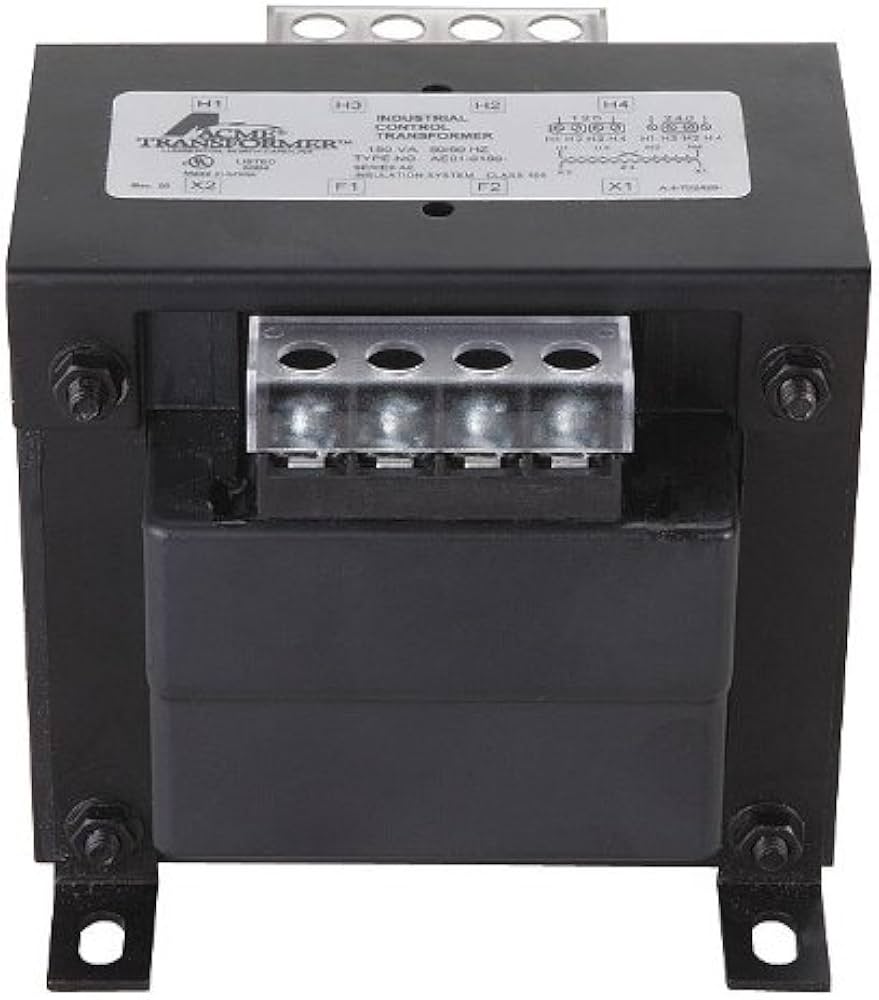
Dry Type Transformers
Explore our range of new, used, and reconditioned dry type transformers designed for reliability and efficiency.
What Is a Cast Coil Transformer?
A cast coil transformer, also called a cast resin transformer, uses windings completely encapsulated in epoxy resin under vacuum casting. The entire coil is moulded into a solid block, creating a highly durable insulation system.
Cast Coil Transformer Advantages:
• High resistance to humidity and contamination
• Strong short-circuit performance
• Minimal maintenance requirements
• Long service life in aggressive environments
Cast coil units are often selected for chemical plants, marine environments, mining facilities, and heavy industrial operations.
VPI vs Cast Coil Transformer: Head-to-Head Comparison
| Factor | VPI Transformer | Cast Coil Transformer |
|---|---|---|
| Insulation Method | Vacuum-pressure resin impregnation | Full epoxy encapsulation in mold |
| Upfront Cost | Lower (baseline) | ~50% higher than VPI |
| Lifecycle Cost | Higher (more maintenance) | Lower (near maintenance-free) |
| Moisture Resistance | Moderate | Excellent fully sealed |
| Thermal Flexibility | Class F/H – better cooling ducts | Class H – limited duct options |
| Fan-Assist Upgrade | +33% kVA capacity | +50% kVA capacity |
| Maintenance Required | Regular inspections needed | Minimal ventilation check only |
| Failure Mode | Gradual, with warning signs | Rare but sudden if severe fault |
| Repairability | Windings removable & repairable | Difficult – epoxy encapsulation |
| Customization | Easier – flexible supply chain | Longer lead time, mold-dependent |
| Best For | Indoor, dry, controlled environments | Harsh, humid, chemical, outdoor environments |
VPI vs Cast Coil Cost Comparison (Lifecycle Perspective)
Initial Capital Cost (CAPEX)
• VPI transformers generally cost less upfront.
• Cast coil transformers carry higher manufacturing cost due to epoxy casting.
Maintenance Cost
• VPI may require periodic cleaning and insulation inspection.
• Cast coil units require minimal maintenance.
Downtime & Risk
In high-contamination environments, VPI transformers may face higher long-term risk. Cast coil reduces this risk significantly.
Total Cost of Ownership (15–20 Years)
• Controlled indoor installation → VPI may be more economical.
• Harsh industrial installation → Cast coil often delivers better long-term value.
When evaluating vpi vs cast coil cost comparison, lifecycle analysis is more important than initial price alone.
VPI vs Cast Coil Maintenance Comparison
VPI Maintenance Requirements:
• Periodic inspection
• Dust cleaning
• Insulation condition monitoring
Cast Coil Maintenance Requirements:
• Minimal cleaning
• Visual inspection
• Lower environmental degradation risk
For facilities prioritizing low maintenance and long service life, cast coil often provides operational advantages.
Which Dry Type Transformer Is Right for Your Application?
The single most important factor in the VPI vs cast coil decision is your installation environment. A premium cast coil unit is unnecessary overhead in a clean server room. A VPI unit in a coastal chemical plant is a reliability risk waiting to surface. Use the matrix below to identify the right transformer technology for your specific conditions.
| Installation Environment | Recommended Technology | Key Reason |
|---|---|---|
| Commercial Buildings (HVAC, Lighting) | VPI | Cost-effective, controlled environment |
| Chemical Process Plants | Cast Coil | Resistant to corrosive gases & moisture |
| Data Centers | VPI or Cast Coil | Depends on humidity & tier requirements |
| Offshore / Marine / Ships | Cast Coil | Salt spray & vibration resistance |
| Wastewater / Sewage Facilities | Cast Coil | High humidity, corrosive atmosphere |
| Mining Operations | Cast Coil | Dust, shock loads, harsh conditions |
| Hospitals / Schools (Indoor) | VPI | Budget-friendly, clean indoor air |
| Outdoor Substations | Cast Coil | Weather & moisture protection |
| Food Processing Plants | Cast Coil | Hygiene, wash-down environments |
| General Industrial (Indoor, Dry) | VPI | Reliable, lower TCO in mild environment |
There is no universal answer to the VPI vs cast coil debate the right technology depends on three core variables: your installation environment, your maintenance capacity, and your total lifecycle budget.
Choose a VPI transformer if your environment is indoor and dry, your project is cost-sensitive, and you have routine maintenance infrastructure in place. VPI delivers reliable performance in clean commercial and industrial settings at a lower initial investment.
Choose a cast coil transformer if your environment is humid, chemically aggressive, or outdoor; if maintenance access is limited or costly; or if you need maximum uptime and predictability across a long asset lifecycle. The higher upfront cost routinely pays for itself through reduced maintenance and fewer unplanned outages.
Frequently Asked Questions
Q1. What is the difference between VPI and cast coil transformer?
The primary difference is insulation construction. VPI uses vacuum pressure impregnated resin on windings, while cast coil uses fully encapsulated epoxy resin for superior environmental resistance.
Q2. Which transformer requires less maintenance?
Cast coil transformers typically require less maintenance than VPI units.
Q3. Which dry type transformer is better for humid environments?
Cast coil transformers are generally better suited for high humidity or corrosive environments due to their sealed epoxy insulation system.
Q4. Is cast coil transformer worth the higher cost?
In harsh industrial environments, the higher upfront cost can be offset by reduced maintenance and longer service life.
Conclusion
VPI and cast coil transformers both have their place in modern power distribution the key is matching the technology to the environment. VPI delivers reliable, cost-effective performance in clean indoor settings. Cast coil delivers maximum durability and the lowest lifecycle costs in tough operating conditions where reliability is non-negotiable.
Bruce Electric’s transformer specialists work with facility managers, engineers, and contractors to specify the right dry-type transformer for every application. Whether you need a VPI unit for a new commercial building or a cast coil transformer for a chemical processing facility or offshore platform, we have the technical expertise and product access to get it right.
Ready to choose the right transformer for your project? Contact Bruce Electric’s specialists today for a free sizing consultation.