Shop by Categories
CLUTTER INTO PROFIT

Turn your used or unwanted transformers or circuit breakers into cash or credit
Equipment Purchase Program

1000 kVA Transformers
A 1000 kVA transformer is a high-capacity power distribution transformer used in large commercial, industrial, institutional, and infrastructure applications. Rated at 1,000,000 volt-amperes (VA), it supports substantial electrical loads and commonly serves manufacturing facilities, data centers, healthcare campuses, utility support systems, large HVAC installations, and facility-wide power distribution networks.
At Bruce Electric Equipment Corp., we supply new 1000 kVA dry type transformers online and provide custom sourcing support for used, surplus, and reconditioned units through our RFQ process. Available configurations include three-phase, step-up, and step-down transformers, with options such as NEMA-rated enclosures and copper or aluminum windings, depending on the specific product. We work with leading manufacturers including Rex Power Magnetics, GE, Hammond Power Solutions, Acme Electric, Federal Pacific, Jefferson Electric, ABB, MGM Transformers, and others. Whether you are planning a facility expansion, infrastructure upgrade, or equipment replacement project, our team can help identify a suitable 1000 kVA transformer based on your application, voltage, configuration, and other technical requirements.
Showing 1–15 of 42 results
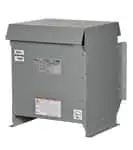
Hammond Power Solutions 1000 kVA Three Phase Dry Type Transformer: 480V - 120, 208YV (SG3A1000KB0C)
SKU: SG3A1000KB0CManufacturer: Hammond Power Solutions
Weight: 5200 lbs
KVA : 1000
PHASE : THREE
PRIMARY VOLTAGE : 480
SECONDARY VOLTAGE : 120, 208Y
WINDING MATERIAL : COPPER
HZ : 60
TEMP RISE : 150
ENCLOSURE : NEMA 3R
TYPE : ENERGY EFFICIENT GENERAL PURPOSE DISTRIBUTION
OTHER : SCD10
TAPS : 2+2-2.5%
TRADE NAME : HPS SENTINEL G
Hammond Power Solutions 1000 kVA Three Phase Dry Type Transformer: 480V - 120, 208YV (SG3A1000KB)
SKU: SG3A1000KBManufacturer: Hammond Power Solutions
Weight: 5400 lbs
KVA : 1000
PHASE : THREE
PRIMARY VOLTAGE : 480
SECONDARY VOLTAGE : 120, 208Y
WINDING MATERIAL : ALUMINUM
HZ : 60
TEMP RISE : 150
ENCLOSURE : NEMA 3R
TYPE : ENERGY EFFICIENT GENERAL PURPOSE DISTRIBUTION
OTHER : SCD10
TAPS : 2+2-2.5%
TRADE NAME : HPS SENTINEL G
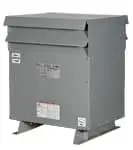
Hammond Power Solutions 1000 kVA Three Phase Dry Type Transformer: 480V - 120, 208YV (SK3A1000KB3K)
SKU: SK3A1000KB3KManufacturer: Hammond Power Solutions
Weight: 5700 lbs
KVA : 1000
PHASE : THREE
PRIMARY VOLTAGE : 480
SECONDARY VOLTAGE : 120, 208Y
WINDING MATERIAL : COPPER
HZ : 60
TEMP RISE : 150
ENCLOSURE : NEMA 3R
TYPE : ENERGY EFFICIENT K-FACTOR
OTHER : SCD10
TAPS : 2+2-2.5%
TRADE NAME : HPS SENTINEL K
Hammond Power Solutions 1000 kVA Three Phase Dry Type Transformer: 480V - 120, 208YV (SK3A1000KB3S)
SKU: SK3A1000KB3SManufacturer: Hammond Power Solutions
Weight: 5700 lbs
KVA : 1000
PHASE : THREE
PRIMARY VOLTAGE : 480
SECONDARY VOLTAGE : 120, 208Y
WINDING MATERIAL : ALUMINUM
HZ : 60
TEMP RISE : 150
ENCLOSURE : NEMA 3R
TYPE : ENERGY EFFICIENT K-FACTOR
OTHER : SCD10
TAPS : 2+2-2.5%
TRADE NAME : HPS SENTINEL K
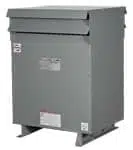
Hammond Power Solutions 1000 kVA Three Phase Dry Type Transformer: 480V - 208Y/120V (SK3A1000KB4S)
SKU: SK3A1000KB4SManufacturer: Hammond Power Solutions
KVA : 1000
PHASE : THREE
WINDING MATERIAL : ALUMINUM
TRADE NAME IF ANY : HPS SYNERGY
TEMP RISE : 150°C
PRIMARY VOLTAGE : 480
SECONDARY VOLTAGE : 208Y/120
TYPE : simple
Hammond Power Solutions 1000 kVA Three Phase Dry Type Transformer: 480V - 208Y/120V (SK3A1000KB4K)
SKU: SK3A1000KB4KManufacturer: Hammond Power Solutions
KVA : 1000
PHASE : THREE
WINDING MATERIAL : COPPER
TRADE NAME IF ANY : HPS SYNERGY
TEMP RISE : 150°C
PRIMARY VOLTAGE : 480
SECONDARY VOLTAGE : 208Y/120
TYPE : simple
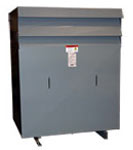
Hammond Power Solutions 1000 kVA Three Phase Dry Type Transformer: 2400V - 120/240V (MVC1000RE)
SKU: MVC1000REManufacturer: Hammond Power Solutions
Weight: 42 lbs
KVA : 1000
PHASE : THREE
PRIMARY VOLTAGE : 2400
SECONDARY VOLTAGE : 120/240
WINDING MATERIAL : COPPER
HZ : 60
TEMP RISE : 150
ENCLOSURE : NEMA 3R HEAVY DUTY
TYPE : ENERGY EFFICIENT MEDIUM VOLTAGE DISTRIBUTION
TRADE NAME : HPS MILLENNIUM
Hammond Power Solutions 1000 kVA Three Phase Dry Type Transformer: 3300V - 120/240V (MVC1000QE)
SKU: MVC1000QEManufacturer: Hammond Power Solutions
Weight: 42 lbs
KVA : 1000
PHASE : THREE
PRIMARY VOLTAGE : 3300
SECONDARY VOLTAGE : 120/240
WINDING MATERIAL : ALUMINUM
HZ : 60
TEMP RISE : 150
ENCLOSURE : NEMA 3R HEAVY DUTY
TYPE : ENERGY EFFICIENT MEDIUM VOLTAGE DISTRIBUTION
TRADE NAME : HPS MILLENNIUM
Hammond Power Solutions 1000 kVA Three Phase Dry Type Transformer: 4800V - 120/240V (MVC1000TE)
SKU: MVC1000TEManufacturer: Hammond Power Solutions
Weight: 42 lbs
KVA : 1000
PHASE : THREE
PRIMARY VOLTAGE : 4800
SECONDARY VOLTAGE : 120/240
WINDING MATERIAL : COPPER
HZ : 60
TEMP RISE : 150
ENCLOSURE : NEMA 3R HEAVY DUTY
TYPE : ENERGY EFFICIENT MEDIUM VOLTAGE DISTRIBUTION
TRADE NAME : HPS MILLENNIUM
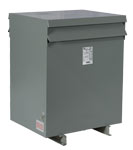
Hammond Power Solutions 1000 kVA Three Phase Dry Type Transformer: 4160V - 480Y/277V (MV3S1000SKC)
SKU: MV3S1000SKCManufacturer: Hammond Power Solutions
Weight: 4800 lbs
KVA : 1000
PHASE : THREE
PRIMARY VOLTAGE : 4160
SECONDARY VOLTAGE : 480Y/277
WINDING MATERIAL : COPPER
HZ : 60
TEMP RISE : 150
ENCLOSURE : NEMA 3R HEAVY DUTY
TYPE : ENERGY EFFICIENT MEDIUM VOLTAGE DISTRIBUTION
OTHER : SCD10
TRADE NAME : HPS MILLENNIUM
Hammond Power Solutions 1000 kVA Three Phase Dry Type Transformer: 4160V - 600V (MV3S1000SP)
SKU: MV3S1000SPManufacturer: Hammond Power Solutions
Weight: 4600 lbs
KVA : 1000
PHASE : THREE
PRIMARY VOLTAGE : 4160
SECONDARY VOLTAGE : 600
WINDING MATERIAL : ALUMINUM
HZ : 60
TEMP RISE : 150
ENCLOSURE : NEMA 3R HEAVY DUTY
TYPE : ENERGY EFFICIENT MEDIUM VOLTAGE DISTRIBUTION
OTHER : SCD10
TRADE NAME : HPS MILLENNIUM
Hammond Power Solutions 1000 kVA Three Phase Dry Type Transformer: 4160V - 600V (MV3S1000SPC)
SKU: MV3S1000SPCManufacturer: Hammond Power Solutions
Weight: 4800 lbs
KVA : 1000
PHASE : THREE
PRIMARY VOLTAGE : 4160
SECONDARY VOLTAGE : 600
WINDING MATERIAL : COPPER
HZ : 60
TEMP RISE : 150
ENCLOSURE : NEMA 3R HEAVY DUTY
TYPE : ENERGY EFFICIENT MEDIUM VOLTAGE DISTRIBUTION
OTHER : SCD10
TRADE NAME : HPS MILLENNIUM
Hammond Power Solutions 1000 kVA Three Phase Dry Type Transformer: 4160V - 480Y/277V (MV3S1000SK)
SKU: MV3S1000SKManufacturer: Hammond Power Solutions
Weight: 4500 lbs
KVA : 1000
PHASE : THREE
PRIMARY VOLTAGE : 4160
SECONDARY VOLTAGE : 480Y/277
WINDING MATERIAL : ALUMINUM
HZ : 60
TEMP RISE : 150
ENCLOSURE : NEMA 3R HEAVY DUTY
TYPE : ENERGY EFFICIENT MEDIUM VOLTAGE DISTRIBUTION
OTHER : SCD10
TRADE NAME : HPS MILLENNIUM
Hammond Power Solutions 1000 kVA Three Phase Dry Type Transformer: 4160V - 208Y/120V (MV3S1000SBC)
SKU: MV3S1000SBCManufacturer: Hammond Power Solutions
Weight: 4800 lbs
KVA : 1000
PHASE : THREE
PRIMARY VOLTAGE : 4160
SECONDARY VOLTAGE : 208Y/120
WINDING MATERIAL : COPPER
HZ : 60
TEMP RISE : 150
ENCLOSURE : NEMA 3R HEAVY DUTY
TYPE : ENERGY EFFICIENT MEDIUM VOLTAGE DISTRIBUTION
OTHER : SCD10
TRADE NAME : HPS MILLENNIUM
KVA : 1000
PHASE : THREE
PRIMARY VOLTAGE : 4160
SECONDARY VOLTAGE : 208Y/120
WINDING MATERIAL : ALUMINUM
HZ : 60
TEMP RISE : 150
ENCLOSURE : NEMA 3R HEAVY DUTY
TYPE : ENERGY EFFICIENT MEDIUM VOLTAGE DISTRIBUTION
OTHER : SCD10
TRADE NAME : HPS MILLENNIUM
1000 kVA Transformer Specifications
A 1000 kVA transformer is rated to deliver 1,000,000 volt-amperes (VA) of apparent power under its specified operating conditions. The exact electrical and mechanical characteristics vary based on voltage ratings, phase configuration, insulation system, enclosure design, cooling method, and manufacturer specifications. Always confirm nameplate data against the certified drawing for the specific unit before ordering.
| Specification | Typical Value |
|---|---|
| kVA Rating | 1000 kVA (1,000,000 VA) |
| Transformer Type | Dry-Type Transformers, Step-Up, and Step-Down Configurations Available |
| Phase | Three-Phase |
| Frequency | 60 Hz |
| Cooling Method | Air-Cooled Dry Type (AN) |
| Primary Voltage | Common configurations include 480V, 208V, 240V, 600V, 2400V, 3300V, 4160V, 4800V, 6600V, 7200V, and other |
| Secondary Voltage | Common configurations include 208Y/120V, 480Y/277V, 480V, 240V, 600V, 120/240V, and other |
| Enclosure Types | NEMA 1, NEMA 2, NEMA 3R, and NEMA 3R Heavy Duty |
| Winding Material | Copper or Aluminum |
| Insulation Class | Commonly 220°C (Varies by Manufacturer) |
| Temperature Rise | Typically 80°C, 115°C, or 150°C |
| Impedance | Typically 5-7.5% (Varies by Manufacturer and Design) |
| Mounting Style | Floor Mounted |
| Standards Compliance | Applicable UL, NEMA, and manufacturer-specific standards/requirements, depending on the transformer design and application |
Always confirm nameplate data against the certified drawing for your specific unit before ordering. Need help reading a nameplate, matching a replacement to your existing system, or requesting certified outline drawings? Contact our team before you buy we’ll help verify the right specification.
How Many Amps Can a 1000 kVA Transformer Handle?
The full-load current of a 1,000 kVA transformer depends on its phase configuration and rated voltage.
For a single-phase transformer: Amps = (kVA × 1,000) ÷ Volts
For a three-phase transformer: Amps = (kVA × 1,000) ÷ (Volts × 1.732)
1000 kVA Transformer Amperage Chart
| Voltage | Single-Phase (A) | Three-Phase (A) |
|---|---|---|
| 120V | 8,333 A | 4,811 A |
| 208V | 4,808 A | 2,776 A |
| 240V | 4,167 A | 2,406 A |
| 277V | 3,610 A | 2,085 A |
| 480V | 2,083 A | 1,203 A |
| 600V | 1,667 A | 962 A |
These values represent the approximate full-load current corresponding to a 1,000 kVA transformer at the stated rated voltage and phase configuration. Actual transformer current depends on the transformer’s nameplate ratings and operating conditions.
Note: For transformers rated 1,000 V nominal or less, overcurrent protection requirements are addressed by NEC 450.3(B) and Table 450.3(B). Final conductor and protection sizing should be determined from the applicable NEC requirements and the transformer’s nameplate data.
Common 1000 kVA Transformer Configurations
A 1000 kVA transformer can be configured for different voltage-conversion and distribution requirements depending on the facility’s electrical system, available source voltage, connected equipment, and application.
Common Step-Down Transformer Configurations
| Primary Voltage | Secondary Voltage | Typical Application |
|---|---|---|
| 480V | 208Y/120V | Commercial and facility distribution |
| 600V | 208Y/120V | Industrial distribution systems |
| 600V | 480Y/277V | Industrial and commercial power distribution |
| 2400V | 480Y/277V | Medium-voltage distribution |
| 4160V | 208Y/120V | Medium-voltage facility distribution |
| 4160V | 480Y/277V | Industrial and large-facility distribution |
Common Step-Up Transformer Configurations
| Primary Voltage | Secondary Voltage | Typical Application |
|---|---|---|
| 208V | 480Y/277V | Supplying equipment requiring higher distribution voltage |
| 480V | 480Y/277V | Applications requiring the specified primary-secondary relationship |
| 480V | 600V | Systems requiring a higher secondary voltage |
| Custom | Custom | OEM, industrial, infrastructure, or project-specific requirements |
These configurations are examples rather than a complete list of available 1000 kVA combinations. The actual transformer must be selected according to the required primary and secondary voltage, phase, winding connection, grounding arrangement, impedance, taps, and application.
Bruce Electric’s product data specifically documents 1000 kVA three-phase configurations such as 480V to 208Y/120V, 208V to 480Y/277V, 600V to 208Y/120V, 2400V to 480Y/277V, and 4160V to 208Y/120V or 480Y/277V, as well as higher-voltage primary configurations.
Important: Do not assume that every 1000 kVA transformer can be reverse-fed or used interchangeably as a step-up transformer. Reverse-feed suitability depends on the specific transformer design, voltage ratings, connections, taps, impedance, and manufacturer’s instructions. Verify compatibility with the manufacturer before applying a transformer in a reverse-feed or step-up configuration.
1000 kVA Transformer Weight and Dimensions
The weight and dimensions of a 1000 kVA transformer vary by manufacturer, voltage class, winding material, enclosure, and construction. As a general planning reference, many dry-type 1000 kVA transformers can weigh approximately 4,000-10,000 lb, depending on the specific configuration.
Physical dimensions also vary considerably. A 1000 kVA transformer may occupy a footprint of roughly 4-5 ft wide by 4-6 ft deep, with overall height commonly in the range of 5-7.5 ft. These figures are approximate planning values only and should not be used for final equipment layout or structural calculations.
For transportation, rigging, floor loading, and installation planning, always verify the actual equipment weight and certified outline drawing from the manufacturer before the transformer is ordered or installed.
Applications of 1000 kVA Dry Type Transformers
A 1000 kVA transformer can serve as a major distribution point within a facility. Typical applications include:
• Industrial Manufacturing: Production lines, motor control centers, plant-wide distribution.
• Commercial & Institutional Buildings: Main distribution systems, office complexes, educational campuses.
• Data Centers: UPS systems, mission-critical power distribution, capacity expansion.
• Healthcare Campuses: Hospital distribution, medical equipment infrastructure.
• HVAC & Central Plant Systems: Chiller plants, pumping systems, central mechanical infrastructure.
• Water & Wastewater Facilities: Pump stations, treatment plants, utility-connected infrastructure.
• Renewable Energy: Solar and battery energy storage system (BESS) interconnection, particularly with the medium-voltage line.
The actual suitability of a 1000 kVA transformer depends on the load profile, voltage system, environmental conditions, installation arrangement, and applicable electrical requirements.
How to Select the Right 1000 kVA Transformer
Before requesting a 1000 kVA transformer, gather the following information:
• Primary Voltage: Identify the available source voltage and connection.
• Secondary Voltage: Confirm the voltage required by the downstream distribution equipment.
• Phase: Verify whether the system requires three-phase or a specialized single-phase configuration.
• Load Characteristics: Review connected load, demand, motor starting requirements, nonlinear loads, and expected future expansion.
• Transformer Design: Determine whether you need general-purpose, K-factor, energy-efficient, isolation, medium-voltage, or another specific design.
• Enclosure and Installation Environment: Confirm whether the transformer will be installed indoors or outdoors and select the appropriate enclosure and environmental protection.
• Physical Requirements: Verify dimensions, weight, access, floor loading, ventilation, cable entry, termination arrangement, and working clearances.
• Electrical Characteristics: Review impedance, taps, insulation system, temperature rise, BIL where applicable, grounding, and protection requirements.
IEEE and NEMA standards provide important technical guidance for dry-type transformer design, installation, application, loading and transformer testing. Applicable requirements depend on the specific transformer type and voltage class.
1000 kVA Transformer Installation Considerations
A transformer of this capacity requires proper planning before delivery and installation. Confirm that the installation location can accommodate the transformer’s weight, dimensions, ventilation requirements, electrical clearances, and connection arrangement.
For dry-type equipment, adequate airflow is particularly important because heat generated during operation must be dissipated through the surrounding air or the transformer’s specified cooling system. Installation should also account for transportation and rigging access, floor loading, conductor routing, grounding, upstream protection, and downstream switchgear.
Use the manufacturer’s certified outline drawing and installation instructions for the specific transformer. Do not rely on generic dimensions or weight estimates when preparing the installation area.
Why Source Your 1000 kVA Transformer from Bruce Electric?
Bruce Electric Equipment specializes in electrical distribution equipment and maintains a broad transformer inventory covering multiple manufacturers, voltage classes, configurations, and applications. Its transformer category includes dry-type, medium-voltage, general-purpose, K-factor, isolation, buck-boost, autotransformer, single-phase, and three-phase equipment.
For a 1000 kVA requirement, the most useful starting point is the actual electrical specification. Providing the primary voltage, secondary voltage, phase, winding material, enclosure, application, and any special requirements allows Bruce Electric to identify suitable transformer options rather than recommending a unit based only on its kVA rating.
Frequently Asked Questions
1. How do I read a 1000 kVA transformer nameplate?
A 1000 kVA transformer nameplate typically includes the kVA rating, primary voltage, secondary voltage, phase, frequency, impedance, temperature rise, insulation class, enclosure type, and tap information.
2. What is the typical service life of a 1000 kVA dry type transformer?
A properly installed and maintained dry-type transformer can remain in service for several decades. Service life depends on loading conditions, operating temperature, environmental conditions, and maintenance practices.
3. Can a 1000 kVA transformer be used outdoors?
Yes. A 1000 kVA transformer can be installed outdoors when supplied with an enclosure designed for outdoor service, such as a NEMA 3R enclosure, and installed according to applicable electrical requirements.
4. What winding materials are available for a 1000 kVA transformer?
1000 kVA transformers are commonly available with either copper or aluminum windings. The selection depends on project requirements, performance preferences, budget considerations, and manufacturer offerings.
5. Can a 1000 kVA transformer be used for both step-up and step-down applications?
Many 1000 kVA transformers can be applied in either step-up or step-down service, provided the transformer design, voltage ratings, and manufacturer specifications support the intended configuration.
Technical Reading
1. Dry Type Transformer Testing & Troubleshooting Guide
2. Dry Type Transformer Cooling: Natural Air vs. Forced Air
3. Transformer Losses & Efficiency Guide
4. Understanding Transformer Taps and Their Role in Voltage Regulation