Shop by Categories
CLUTTER INTO PROFIT

Turn your used or unwanted transformers or circuit breakers into cash or credit
Equipment Purchase Program

225 kVA Transformers
A 225 kVA transformer is rated to deliver 225,000 volt-amperes of apparent power. At this capacity, dry-type units are widely used for commercial building distribution, manufacturing equipment, HVAC and mechanical systems, data centers, healthcare facilities, institutional campuses, renewable-energy systems, and major electrical upgrades.
Bruce Electric supplies and sources new 225 kVA dry-type transformers from Acme Electric, EGS/SolaHD, Federal Pacific, General Electric, Hammond Power Solutions, Jefferson Electric, and more. The available products are three-phase step-down, purpose-built step-up configurations. Options include copper or aluminum windings and NEMA Type 1, Type 2, Type 3R, and heavy-duty Type 3R enclosures; and 80°C, 115°C, 130°C, and 150°C temperature-rise options. New units are listed on our website with RFQ process. Used, surplus, reconditioned units are sourced upon request and are subject to availability and technical review.
Showing 1–15 of 398 results
EGS/SOLAHD 225 kVA Three Phase Dry Type Transformer: 480V - 480Y/277V (ET81H225S)
SKU: ET81H225SManufacturer: EGS/SOLAHD
Weight: 1342 lbs
KVA : 225
PHASE : THREE
PRIMARY VOLTAGE : 480
SECONDARY VOLTAGE : 480Y/277
WINDING MATERIAL : ALUMINUM
HZ : 60
TEMP RISE : 150
ENCLOSURE : NEMA 1
TYPE : VENTILATED DISTRIBUTION TRANSFORMER
TAPS : 2, 2.5% FCAN/4, 2.5% FCBN
EGS/SOLAHD 225 kVA Three Phase Dry Type Transformer: 480V - 240DV (ET5HF225S)
SKU: ET5HF225SManufacturer: EGS/SOLAHD
Weight: 1342 lbs
KVA : 225
PHASE : THREE
PRIMARY VOLTAGE : 480
SECONDARY VOLTAGE : 240D
WINDING MATERIAL : ALUMINUM
HZ : 60
TEMP RISE : 115
ENCLOSURE : NEMA 1
TYPE : VENTILATED DISTRIBUTION TRANSFORMER WITH REDUCED CAPACITY CENTER TAP
TAPS : 2, 2.5% FCAN/4, 2.5% FCBN
EGS/SOLAHD 225 kVA Three Phase Dry Type Transformer: 480V - 240DV (ET5HB225S)
SKU: ET5HB225SManufacturer: EGS/SOLAHD
Weight: 1525 lbs
KVA : 225
PHASE : THREE
PRIMARY VOLTAGE : 480
SECONDARY VOLTAGE : 240D
WINDING MATERIAL : ALUMINUM
HZ : 60
TEMP RISE : 80
ENCLOSURE : NEMA 1
TYPE : VENTILATED DISTRIBUTION TRANSFORMER WITH REDUCED CAPACITY CENTER TAP
TAPS : 2, 2.5% FCAN/4, 2.5% FCBN
EGS/SOLAHD 225 kVA Three Phase Dry Type Transformer: 480V - 240DV (ET5H225S)
SKU: ET5H225SManufacturer: EGS/SOLAHD
Weight: 1342 lbs
KVA : 225
PHASE : THREE
PRIMARY VOLTAGE : 480
SECONDARY VOLTAGE : 240D
WINDING MATERIAL : ALUMINUM
HZ : 60
TEMP RISE : 150
ENCLOSURE : NEMA 1
TYPE : VENTILATED DISTRIBUTION TRANSFORMER WITH REDUCED CAPACITY CENTER TAP
TAPS : 2, 2.5% FCAN/4, 2.5% FCBN
EGS/SOLAHD 225 kVA Three Phase Dry Type Transformer: 480V - 208Y/120V (ET2HF225S)
SKU: ET2HF225SManufacturer: EGS/SOLAHD
Weight: 1342 lbs
KVA : 225
PHASE : THREE
PRIMARY VOLTAGE : 480
SECONDARY VOLTAGE : 208Y/120
WINDING MATERIAL : ALUMINUM
HZ : 60
TEMP RISE : 115
ENCLOSURE : NEMA 1
TYPE : VENTILATED DISTRIBUTION TRANSFORMER
TAPS : 2, 2.5% FCAN/4, 2.5% FCBN
EGS/SOLAHD 225 kVA Three Phase Dry Type Transformer: 480V - 208Y/120V (ET2HB225S)
SKU: ET2HB225SManufacturer: EGS/SOLAHD
Weight: 1525 lbs
KVA : 225
PHASE : THREE
PRIMARY VOLTAGE : 480
SECONDARY VOLTAGE : 208Y/120
WINDING MATERIAL : ALUMINUM
HZ : 60
TEMP RISE : 80
ENCLOSURE : NEMA 1
TYPE : VENTILATED DISTRIBUTION TRANSFORMER
TAPS : 2, 2.5% FCAN/4, 2.5% FCBN
EGS/SOLAHD 225 kVA Three Phase Dry Type Transformer: 480V - 208Y/120V (ET2H225SCU)
SKU: ET2H225SCUManufacturer: EGS/SOLAHD
Weight: 1325 lbs
KVA : 225
PHASE : THREE
PRIMARY VOLTAGE : 480
SECONDARY VOLTAGE : 208Y/120
WINDING MATERIAL : COPPER
HZ : 60
TEMP RISE : 150
ENCLOSURE : NEMA 1
TYPE : VENTILATED DISTRIBUTION TRANSFORMER
TAPS : 2, 2.5% FCAN/4, 2.5% FCBN
EGS/SOLAHD 225 kVA Three Phase Dry Type Transformer: 480V - 208Y/120V (ET2H150)
SKU: ET2H150Manufacturer: EGS/SOLAHD
Weight: 972 lbs
KVA : 225
PHASE : THREE
PRIMARY VOLTAGE : 480
SECONDARY VOLTAGE : 208Y/120
WINDING MATERIAL : ALUMINUM
HZ : 60
TEMP RISE : 150
ENCLOSURE : NEMA 1
TYPE : VENTILATED DISTRIBUTION TRANSFORMER
TAPS : 2, 2.5% FCAN/4, 2.5% FCBN
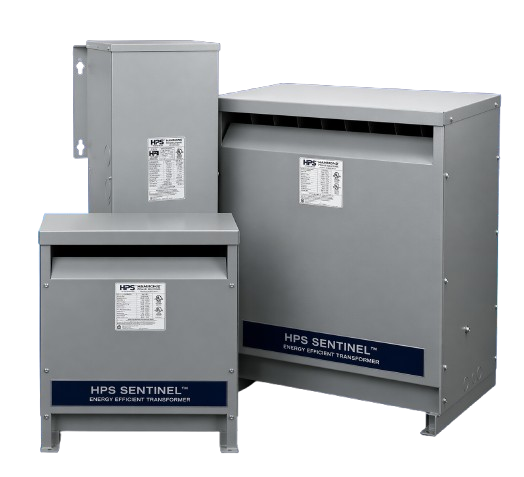
EGS/SOLAHD 225 kVA Three Phase Dry Type Transformer: 480V - 208Y/120V (3H4T2H225S)
SKU: 3H4T2H225SManufacturer: EGS/SOLAHD
Weight: 1342 lbs
KVA : 225
PHASE : THREE
PRIMARY VOLTAGE : 480
SECONDARY VOLTAGE : 208Y/120
WINDING MATERIAL : ALUMINUM
HZ : 60
TEMP RISE : 150
ENCLOSURE : NEMA 1
TYPE : K FACTOR 4 VENTILATED DISTRIBUTION TRANSFORMER
EGS/SOLAHD 225 kVA Three Phase Dry Type Transformer: 480V - 208Y/120V (3H20T2H225S)
SKU: 3H20T2H225SManufacturer: EGS/SOLAHD
Weight: 1515 lbs
KVA : 225
PHASE : THREE
PRIMARY VOLTAGE : 480
SECONDARY VOLTAGE : 208Y/120
WINDING MATERIAL : ALUMINUM
HZ : 60
TEMP RISE : 150
ENCLOSURE : NEMA 1
TYPE : K FACTOR 20 VENTILATED DISTRIBUTION TRANSFORMER
TAPS : 2, 2.5% FCAN/4, 2.5% FCBN
EGS/SOLAHD 225 kVA Three Phase Dry Type Transformer: 480V - 208Y/120V (3H13T2H225S)
SKU: 3H13T2H225SManufacturer: EGS/SOLAHD
Weight: 1515 lbs
KVA : 225
PHASE : THREE
PRIMARY VOLTAGE : 480
SECONDARY VOLTAGE : 208Y/120
WINDING MATERIAL : ALUMINUM
HZ : 60
TEMP RISE : 150
ENCLOSURE : NEMA 1
TYPE : K FACTOR 13 VENTILATED DISTRIBUTION TRANSFORMER
TAPS : 2, 2.5% FCAN/4, 2.5% FCBN
KVA : 225
PHASE : THREE
PRIMARY VOLTAGE : 480
SECONDARY VOLTAGE : 208Y/120
HZ : 60
TEMP RISE : 150
OLD PART NUMBER : TPC-53317-3S
OTHER : 22-E
Acme Electric 225 kVA Three Phase Dry Type Transformer: 480V - 208Y/120V (TPNS01533113S)
SKU: TPNS01533113SManufacturer: Acme Electric
Weight: 325 lbs
KVA : 225
PHASE : THREE
PRIMARY VOLTAGE : 480
SECONDARY VOLTAGE : 208Y/120
HZ : 60
TEMP RISE : 150°
TYPE : K FACTOR 4
OLD PART NUMBER : TPNS-0053317-3S
OTHER : 22-E
KVA : 225
PHASE : THREE
PRIMARY VOLTAGE : 480
SECONDARY VOLTAGE : 208Y/120
WINDING MATERIAL : COPPER
HZ : 60
TEMP RISE : 130 Degree C Rise
ENCLOSURE : NEMA 2
TYPE : Super Efficient Transformers
OLD PART NUMBER : TPC3-53317-3S
OTHER : 22-E
KVA : 225
PHASE : THREE
PRIMARY VOLTAGE : 480
SECONDARY VOLTAGE : 208Y/120
WINDING MATERIAL : COPPER
HZ : 60
TEMP RISE : 115 Degree C Rise
ENCLOSURE : NEMA 2
TYPE : Super Efficient Transformers
OLD PART NUMBER : TPC3-53317-1S
OTHER : 22-E
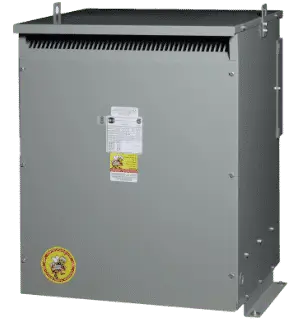
225 kVA Dry-Type Transformers – Perfect for Commercial & Light Industrial.
Ideal for mid-size HVAC systems, office buildings, retail centers, and small manufacturing plants. Available in 480V to 208/120V and 240V configurations. Ships fully assembled with wall-mount or floor-standing options.
✔ 225 kVA units ship in 24–48 hours nationwide ✔ NEMA 1, 3R, and 12 enclosure ratings available ✔ Reconditioned units backed by up to a 2-year warranty
225 kVA Transformer Specifications
Specifications vary by manufacturer, voltage class, winding material, temperature rise, enclosure, and transformer type. The values below summarize the current Bruce Electric product range and common selection parameters.
| Specification | Typical Value |
|---|---|
| Power Rating | 225 kVA (225,000 VA) |
| Phase | Three-Phase |
| Frequency | 60 Hz |
| Primary Voltage | 208V–600V (low voltage); 2400V, 4160V (medium voltage) |
| Secondary Voltage | 208Y/120V, 240D, 480Y/277V, and other configurations |
| Winding Material | Copper or aluminium, depending on model |
| Temperature Rise | 80°C, 115°C, 130°C or 150°C |
| Insulation Class | Commonly 220°C (Varies by Manufacturer) |
| Enclosure Types | NEMA 1, NEMA 2, NEMA 3R, NEMA 3R Heavy Duty (medium-voltage) |
| Cooling | Dry-Type, Air-Cooled (AN) |
| Mounting | Floor Mounted |
| Listings and Efficiency | UL, NEMA, IEEE, and energy-efficiency status vary by catalog number and application; confirm current manufacturer documentation |
How Many Amps Can a 225 kVA Transformer Handle?
A 225 kVA transformer does not have one fixed amperage rating. Full-load current depends on the line-to-line voltage. Because the current Bruce Electric product range is three-phase, the most relevant calculation is:
Three-phase amps = 225,000 / (1.732 x volts)
Use the transformer nameplate and project calculations for final conductor, bus, overcurrent-protection, grounding, and equipment-rating decisions.
| Three-Phase Voltage | Approximate Full-Load Current |
|---|---|
| 208V | 625A |
| 240V | 541A |
| 380V | 342A |
| 400V | 325A |
| 416V | 312A |
| 460V | 282A |
| 480V | 271A |
| 575V | 226A |
| 600V | 217A |
| 2,400V | 54.1A |
| 4,160V | 31.2A |
Important Note: Three-phase calculations use line-to-line voltage. In a 480Y/277V system, use 480V to calculate total three-phase transformer current; 277V is the line-to-neutral voltage for connected branch loads.
225 kVA Transformer Load Capacity
A 225 kVA transformer can supply up to 225,000 VA of apparent power under its rated nameplate conditions. Real-power capacity in kilowatts depends on the load power factor:
kW = kVA x power factor
| Power Factor | Approximate Real-Power Capacity |
|---|---|
| 1.00 | 225 kW |
| 0.90 | 202.5 kW |
| 0.80 | 180 kW |
Improving power factor does not increase the transformer’s 225 kVA nameplate rating. It reduces the kVA required for a given kW load, allowing the available capacity to be used more effectively.
Transformer sizing should account for:
1. Maximum demand and load diversity rather than connected nameplate load alone
2. Motor starting, inrush current, cycling loads, and acceptable voltage drop
3. VFDs, UPS systems, EV chargers, servers, LED drivers, and other nonlinear loads
4. Ambient temperature, elevation, ventilation, enclosure, and temperature-rise limitations
5. Continuous loading, redundancy requirements, and planned facility expansion
225 kVA Transformer Configurations We Have In Stock
225 kVA Three-Phase Transformer Configurations
| Primary Voltage | Secondary Voltage | Typical Application |
|---|---|---|
| 480V Delta | 208Y/120V | Common commercial and industrial step-down distribution; available in general-purpose, K-factor, harmonic-mitigating, and low-noise designs |
| 480V Delta | 480Y/277V | Isolation, separately derived neutral, and same-voltage distribution |
| 208V Delta | 480Y/277V or 480V | Purpose-built step-up supply for higher-voltage equipment and distribution |
| 240V Delta | 208Y/120V | Step-down from 240V service or distribution |
| 600V | 480Y/277V or 208Y/120V | Industrial and Canadian facilities with 600V distribution |
| 208V | 208Y/120V | Isolation and separately derived 208Y/120V distribution |
| 480V | 240D, 240D/120CT, or 240/120V | Industrial loads, legacy delta systems, and mixed utilization loads |
| 240V | 480Y/277V or 480V | Purpose-built step-up for higher-voltage equipment |
| 380V or 480V | 220Y/127V, 380Y/219V, or 400Y/231V | International and export-equipment voltage matching |
| 575V | 480Y/277V | Industrial voltage conversion |
| 460V or 575V | 460Y/266V | Drive-isolation applications |
| 600V | 480V | Autotransformer voltage adjustment where electrical isolation is not required |
| 2.4 or 4.16 kV | 208Y/120V, 480Y/277V, or 600V | Medium-voltage step-down for commercial, industrial, and infrastructure distribution |
Available 225 kVA dry-type designs include general-purpose, energy-efficient, K-factor-rated, harmonic-mitigating, low-noise, drive-isolation, autotransformer, totally enclosed non-ventilated, and medium-voltage transformers. Available voltage combinations, winding materials, enclosures, temperature-rise ratings, and specialty designs vary by manufacturer and model.
Step-Up vs. Step-Down 225 kVA Transformers
A step-down transformer reduces source voltage, such as 480V to 208Y/120V. A purpose-built step-up transformer increases voltage, such as 208V to 480Y/277V. The catalog includes both directions of conversion.
Do not assume that a standard step-down unit can simply be reverse-fed. For step-up service, select a transformer designed or expressly approved for the intended source voltage, output voltage, winding connection, grounding arrangement, tap direction, and energization characteristics.
225 kVA Transformer Weight, Dimensions, and Enclosures
There is no universal 225 kVA transformer weight or footprint. Physical size depends on voltage configuration, winding material, temperature rise, K-factor or harmonic design, enclosure, and manufacturer.
Representative current low-voltage 225 kVA dry-type models are approximately 31-42 inches wide, 25-34 inches deep, and 32-66 inches high, with weights from about 1,160 to 2,600 pounds. Harmonic-mitigating, K-factor, heavy-duty outdoor, and medium-voltage units may be larger or heavier. Use the certified manufacturer drawing and shipping data for rigging, floor loading, cable entry, ventilation, and working-clearance planning.
Common enclosure options include:
1. NEMA Type 1: Indoor electrical rooms and controlled environments
2. NEMA Type 2: Indoor installations requiring additional protection from limited falling moisture
3. NEMA Type 3R: Outdoor installations exposed to rain, sleet, and weather
4. Heavy-duty NEMA Type 3R: Medium-voltage and demanding outdoor applications represented in the current catalog
5. Totally enclosed non-ventilated construction: Adverse indoor environments where a ventilated design is unsuitable
Applications of 225 kVA Transformers
1. Commercial Buildings: Main and secondary distribution, tenant power, lighting, receptacles, HVAC, and service upgrades
2. Industrial Manufacturing: Production equipment, motor control centers, process loads, plant distribution, and facility expansions
3. Data Centers and Critical Infrastructure: UPS-backed distribution, server rooms, telecommunications, and mission-critical systems
4. Healthcare and Institutional Facilities: Hospitals, laboratories, universities, campuses, and building expansion projects
5. HVAC and Mechanical Systems: Chillers, pumps, air-handling equipment, central plants, and mechanical-room distribution
6. Nonlinear and Harmonic Loads: Servers, UPS systems, EV charging, electronic lighting, and power-electronic equipment using appropriate K-factor or harmonic-mitigating designs
7. Renewable Energy and Storage: Solar, battery energy storage, inverter output, and interconnection voltage matching
8. Water and Wastewater: Pump stations, treatment facilities, process equipment, and utility infrastructure
9. International and OEM Equipment: Voltage matching for 380V, 400V, 416V, 440V, 460V, 575V, and other equipment requirements
How to Select the Right 225 kVA Transformer
1. Confirm voltage, connection, and frequency: Verify source voltage, required load voltage, delta or wye connection, neutral requirements, system frequency, and grounding method.
2. Evaluate the load: Review maximum demand, load diversity, motor starting, inrush, nonlinear loads, power factor, duty cycle, voltage drop, and planned expansion.
3. Select the correct transformer family: Use general-purpose designs for conventional distribution, K-factor or harmonic-mitigating units for nonlinear loads, drive-isolation units for drive systems, autotransformers only where isolation is unnecessary, and medium-voltage products for 2.4 or 4.16 kV sources.
4. Review impedance and protection: Confirm available fault current, transformer impedance, interrupting ratings, overcurrent protection, selective coordination, and downstream equipment ratings.
5. Choose construction and enclosure: Specify copper or aluminum windings, temperature rise, insulation system, taps, electrostatic shielding if required, enclosure, sound requirements, and indoor or outdoor exposure.
6. Verify installation and replacement requirements: Check certified dimensions, shipping and operating weight, ventilation, cable access, terminal arrangement, rigging, clearances, and complete existing nameplate data.
225 kVA Transformer Installation Considerations
1. Structural support: Confirm that the floor, pad, mezzanine, or mounting surface can support the transformer and all installation loads.
2. Ventilation and heat dissipation: Maintain manufacturer-required airflow and clearances, and account for room temperature, elevation, enclosure heat, and nearby equipment.
3. Cable and termination space: Plan for conductor size, parallel conductors where required, conduit entry, cable bending radius, neutral capacity, and accessible terminations.
4. Fault-current, grounding, and protection studies: Coordinate transformer impedance, available fault current, overcurrent devices, equipment ratings, grounding, bonding, and separately derived system requirements.
5. Noise and location: Evaluate audible sound, vibration isolation, proximity to occupied spaces, low-noise requirements, and environmental exposure.
6. Maintenance and replacement access: Preserve code-required working space and a practical route for inspection, testing, rigging, and future replacement.
Request a Quote for a 225 kVA Transformer
Bruce Electric Equipment can help identify new, used, surplus, reconditioned, replacement, or application-specific 225 kVA transformer options. Submit your RFQ with the primary voltage, secondary voltage, three-phase connection, frequency, winding material, enclosure, temperature rise, transformer type, K-factor or harmonic requirements, impedance, taps, installation environment, required delivery date, and any approved-equal requirements.
Frequently Asked Questions
Q1. How many amps is a 225 kVA transformer at 480V three-phase?
Approximately 271A at full load, calculated as 225,000 divided by 1.732 x 480. Use the nameplate and project design for final equipment and conductor sizing.
Q2. How many amps is a 225 kVA transformer at 208V three-phase?
Approximately 625A at full load. This current level requires careful feeder, bus, overcurrent-protection, and termination planning.
Q3. How much does a 225 kVA transformer weight?
Representative low-voltage dry-type units range from about 1,160 to 2,600 pounds. Exact weight depends on voltage, winding material, temperature rise, transformer type, enclosure, and manufacturer. Medium-voltage and heavy-duty outdoor units may weigh more.
Q4. What are typical 225 kVA transformer dimensions?
Representative low-voltage models are approximately 31-42 inches wide, 25-34 inches deep, and 32-66 inches high. Always use the certified outline drawing for layout, ventilation, cable access, and rigging.
Q5. What is the expected service life of a 225 kVA dry type transformer?
A properly installed and maintained 225 kVA dry type transformer can remain in service for several decades. Actual service life depends on loading conditions, operating temperature, environmental factors, and maintenance practices.
Technical Reading
1. Dry Type Transformer Testing & Troubleshooting Guide
2. Dry Type Transformer Cooling: Natural Air vs. Forced Air
3. Transformer Losses & Efficiency Guide
4. Understanding Transformer Taps and Their Role in Voltage Regulation