Surge Suppressor vs Surge Protector: What’s the Real Difference?

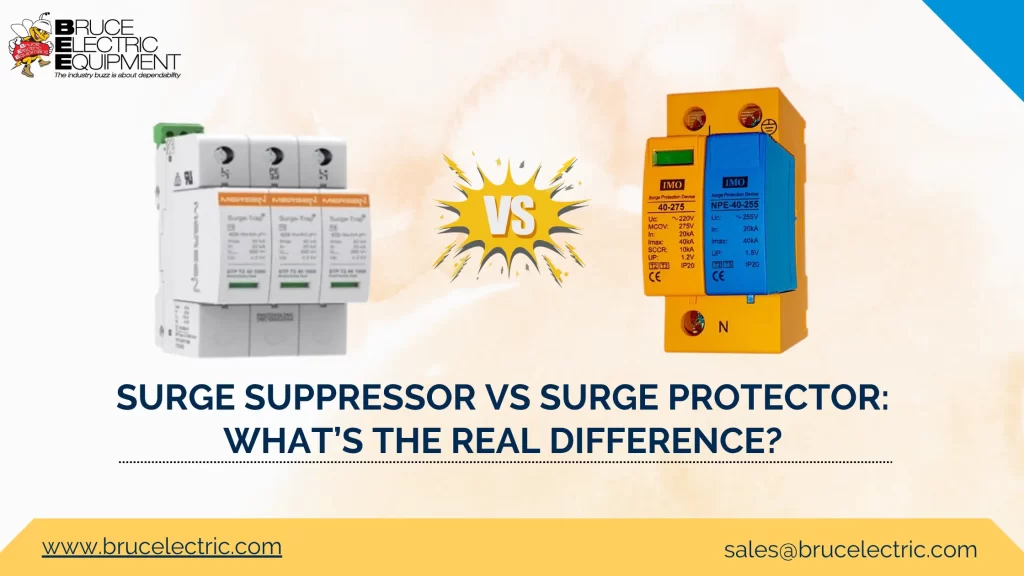
When it comes to safeguarding your electrical equipment, you’ve likely come across two terms: surge suppressor and surge protector. While they’re often used interchangeably, there is a subtle difference that’s worth understanding especially if you’re serious about protecting sensitive devices in your home, office, or industrial facility.
In this blog, we’ll break down what each term means, how they work, and which one is right for your needs. Whether you’re setting up a home office or outfitting a manufacturing plant, knowing the distinction can help prevent costly electrical damage.
Understanding Power Surges
A power surge is a sudden increase in voltage that exceeds the standard flow of electricity. These surges can last just milliseconds but are strong enough to damage electronics, overheat circuits, and reduce equipment lifespan. Common causes include:
- – Lightning strikes
- – Power outages and grid switching
- – Faulty wiring
- – High-powered appliances turning on/off
To avoid damage, you need a device that can either suppress or protect against these surges.
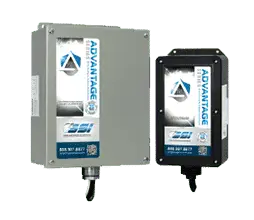
UL 1449 Certified TVSS
Running Heavy Machinery? You Need an Industrial Surge Suppressor.
Transient Voltage Surge Suppressors for factories, hospitals, and data centers. High load capacity with extremely fast response times and low clamping voltage — integrated into PDUs and industrial control panels.
✔ Higher joule ratings than residential plug-in protectors ✔ Designed for HVAC, motors, servers, and automated machinery ✔ 1-year warranty on all surge protection equipment
What Is a Surge Protector?
A surge protector is a device or unit designed to protect electrical equipment from voltage spikes. It diverts excess voltage to the ground before it reaches your connected devices. These are common in:
- – Power strips with built-in surge protection
- – Whole-house surge protection systems
- – Office and home electronics setups
Surge protectors are rated in joules, the higher the number, the more energy they can absorb. Look for UL 1449 certification to ensure safety and reliability.
What Is a Surge Suppressor?
A surge suppressor performs a similar function but is typically used in industrial or commercial contexts. It is often part of a larger power management system. Surge suppressors are built into:
- – Power distribution units (PDUs)
- – Industrial control panels
- – Transient Voltage Surge Suppressors (TVSS units)
They’re engineered for higher load capacities, making them ideal for protecting heavy-duty equipment in factories, hospitals, or data centers.
Surge Suppressor vs Surge Protector: Key Differences
| Feature | Surge Protector | Surge Suppressor |
| Common Usage | Residential and office electronics | Industrial and commercial applications |
| Response Time | Fast (nanoseconds) | Extremely fast, low clamping voltage |
| Load Capacity | Moderate | High (for industrial use) |
| Installation | Plug-and-play (power strips) | Integrated into systems or panels |
| Best For | Computers, TVs, routers, etc. | HVAC, motors, data servers, heavy tools |
Why It Matters
Choosing the right surge protection matters because electrical damage can be expensive. A standard surge protector may be sufficient for your TV and Wi-Fi router, but not for your uninterruptible power supply (UPS), transformers, or automated machinery for those, a commercial-grade surge suppressor is the better fit.
Bruce Electric’s Surge Suppressors
At Bruce Electric Equipment Corp., we offer high-performance surge suppressors for industrial and commercial needs. Our TVSS systems and power conditioning solutions are designed to meet UL and IEEE standards to ensure the safety of your operations. Whether you’re managing a factory, hospital, or data center, our products offer the highest level of surge protection available.
Product Category
Transient Voltage Surge Suppressors
Bruce Electric offers a wide selection of transient voltage surge suppressors (TVSS). Our 110v and 480v battery backup surge protectors provide comprehensive protection for your electrical infrastructure.
Product Category
Power Line Conditioners
Explore new, used & reconditioned power line conditioners for industrial, medical & IT use. Surge protection, voltage regulation & noise filtering in one unit.
FAQs Surge Suppressor vs Surge Protector
Q1. Are Surge Suppressors And Surge Protectors The Same?
A: They serve similar functions, but surge suppressors are typically used in industrial setups, while surge protectors are more common in residential or office use.
Q2. How Long Do Surge Protectors Last?
A: Most last 3–5 years. Check the joule rating regularly. If it’s been hit by a large surge, it may need replacement sooner.
Q3. Can I Use A Surge Protector For Heavy Machinery?
A: No. For large equipment or industrial loads, use a surge suppressor or TVSS designed for higher capacity and voltage management.
Q4. Do Surge Suppressors Need Professional Installation?
A: Yes, most industrial-grade suppressors should be installed by a licensed electrician.
Q5. Does Bruce Electric Sell Both Surge Protectors And Surge Suppressors?
A: Yes, We specialize in industrial-grade surge suppressors and TVSS equipment, perfect for commercial and factory use.
Conclusion
While the terms surge suppressor and surge protector may sound alike, they serve slightly different roles. For standard electronics, surge protectors offer great defense. But for critical infrastructure and industrial machinery, surge suppressors are essential. At Bruce Electric, we help you choose the right protection for your application delivering safety, reliability, and expert support since 1973.
Need help selecting the right surge protection? Contact us today