Electrical Panel Boards:- Types, Features and Where They’re Used

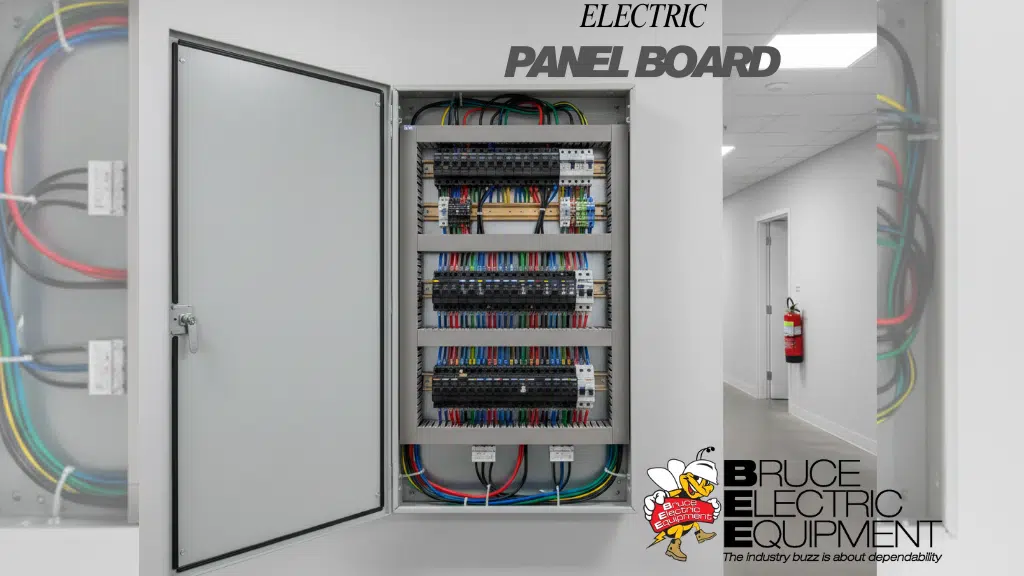
Electrical panel boards, also referred to as electrical distribution boards, are crucial components in any power system, whether industrial, commercial, or residential. These panels serve as centralized hubs where electricity is distributed from the main power source to various circuits throughout a building or facility.
What is an Electrical Panel Board?
An electrical panel board is a distribution point that receives power and allocates it across multiple circuits, while offering overcurrent protection through breakers or fuses. It plays a pivotal role in maintaining safety, isolating faults, and controlling the flow of electricity within a structure.
Whether you’re powering an office building or an industrial facility, choosing the right panelboard is essential for safe and efficient operation.
Why Choosing the Right Panel Board Matters
Selecting the correct panelboard ensures:
• Proper load balancing
• Circuit protection
• Compliance with electrical codes
• Operational efficiency
• Room for future electrical expansion
At Bruce Electric, we stock a wide range of electrical panel boards to meet these critical demands, including isolated ground panelboards for sensitive equipment and high-capacity 400-amp panel boards for industrial facilities.
Product Category
Panelboards
Find quality panelboards for power distribution in commercial and industrial facilities from trusted brands.

Common Types of Electrical Panel Boards
1. 200 Amp Panel Board
A 200-amp panel board is widely used in residential and light commercial applications. It offers ample capacity for modern electrical needs including high-load devices like HVACs, EV chargers, and water heaters.
Features:
• Accommodates up to 40-80 circuits
• Suitable for upgrades in older homes
• Supports expansion for future loads
• Available in main lug and main breaker formats
Applications:
• Single-family homes
• Small offices
• Garages and workshops
Bruce Electric provides reconditioned and used 200-amp panel boards that meet UL standards, offering savings without compromising on safety or quality.
2. 400 Amp aPnel Board
For larger structures with heavy electrical demand, a 400-amp panel board is often necessary.
Features:
• High current capacity for commercial and industrial facilities
• Handles multiple large HVAC systems, elevators, or heavy equipment
• Compatible with 3-phase power configurations
Applications:
• Warehouses
• Multi-unit buildings
• Industrial plants
• Data centers
At Bruce Electric, we stock various 400-amp panel boards from leading manufacturers such as Square D, General Electric, and Eaton.
3. Fused Panelboard
A fused panelboard uses replaceable fuses instead of circuit breakers. It provides a cost-effective solution for simple applications, and is still found in many older buildings and industrial facilities.
Features:
• Provides short-circuit protection
• Fuses “blow” and must be replaced when overloaded
• Less expensive upfront but more costly over time if tripped frequently
Applications:
• Older commercial buildings
• Equipment-specific protection
• Temporary installations
Note: Fused panelboards may not meet modern code in some jurisdictions and should be evaluated during upgrades.
4. Isolated Ground Panelboard
An isolated ground panelboard is designed for environments with sensitive electronic equipment. It ensures that electrical noise and ground loop interference are minimized.
Features:
• Separate grounding path for specific circuits
• Ideal for noise-sensitive equipment
• Reduces risk of data errors and damage
Applications:
• Hospitals
• Recording studios
• Data centers
• Labs and cleanrooms
Electrical Distribution Board vs Panel Board: Is There any Difference?
The terms electrical panel board and electrical distribution board are often used interchangeably. Technically, a panel board is a type of distribution board that:
• Is wall-mounted
• Offers access from the front
• Houses overcurrent protection devices (OCPDs)
Distribution boards can also refer to floor-mounted switchboards or multi-panel systems used in larger facilities. Regardless of terminology, Bruce Electric provides solutions for both standard and custom applications
Panelboard Voltage Ratings and Phase Types
Our inventory includes:
• Single Phase Panelboards – Ideal for residential and light commercial buildings.
• Three Phase Panelboards – Designed for industrial and high-load environments.
• Voltage Ratings – Commonly available in 120/240V, 208Y/120V, 480V, and 277/480V.
Our experts help you match your application with the correct voltage, phase, and amperage panelboard.
Why Buy Panel Boards from Bruce Electric Equipment Corp.?
Bruce Electric has been a trusted supplier since 1973, known for:
• Massive inventory of panelboards and breakers
• Custom sourcing if we don’t have it in stock
Our 15,000-square-foot warehouse is stocked with rare and hard-to-find units and obsolete fused panelboards.
FAQ on Electrical Panel Boards
Q1. What is the most common electrical panel?
A. A 200-amp panel is the most common in modern homes for handling standard electrical loads.
Q2. How do I tell what type of electrical panel I have?
A. Check inside the panel door for the amp rating, type, and manufacturer label.
Q3. How many outlets are on a 20-amp circuit?
A. Typically 10 – 13 outlets, depending on load and local codes.
Q4. Do all breakers fit all panels?
A. No, breakers must match the panel brand and model.
Q5. How long does it take an electrician to replace a panel?
A. Usually 4–8 hours, depending on the job’s complexity.
Q6. How do I know if my breaker panel is full?
A. If no slots remain for breakers, your panel is full.
Q7. What is the average lifespan of a breaker?
A. Most breakers last 25-30 years under normal use.